+86-13901441113


Choosing the right Outdoor Play Slide in 2026 requires more than comparing colors, heights, and catalog prices. Global buyers must assess age suitability, fall zones, materials, drainage, installation conditions, and maintenance access. A slide that performs well in a dry European park may behave differently in tropical humidity or intense sunlight.
Tim Gill, a respected play and playground design specialist, has said, “Risk is a vital component of play.” This principle matters. A well-designed Outdoor Play Slide should offer manageable challenge without creating unnecessary danger. Buyers should examine platform height, guardrails, surface temperature, entrapment risks, impact-absorbing surfacing, and user flow. Relevant standards, such as ASTM F1487 or EN 1176, provide useful reference points, but local regulations still require confirmation.
The market now includes straight slides, spiral slides, tunnel slides, wave slides, embankment slides, and modular combination systems. Each type serves different spaces and budgets. Stainless steel may suit heavy public use. Rotomolded plastic can support flexible shapes and efficient production. Yet neither material is automatically the best choice. That assumption deserves review.
Experience from procurement projects shows that small details often decide long-term value. Bolts need inspection access. Surfaces need cleaning plans. Replacement parts should be available before purchase. Suppliers should provide test documentation, installation guidance, warranty terms, and evidence of quality control.
This guide compares leading Outdoor Play Slide types for global buyers. It considers safety, durability, accessibility, climate response, shipping practicality, and lifecycle cost. The final choice should reflect real children, real weather, and real maintenance teams—not only attractive product photographs.
2026 Top Outdoor Play Slide Types for Global Buyers
Outdoor Play Slide Types and Their Core Features
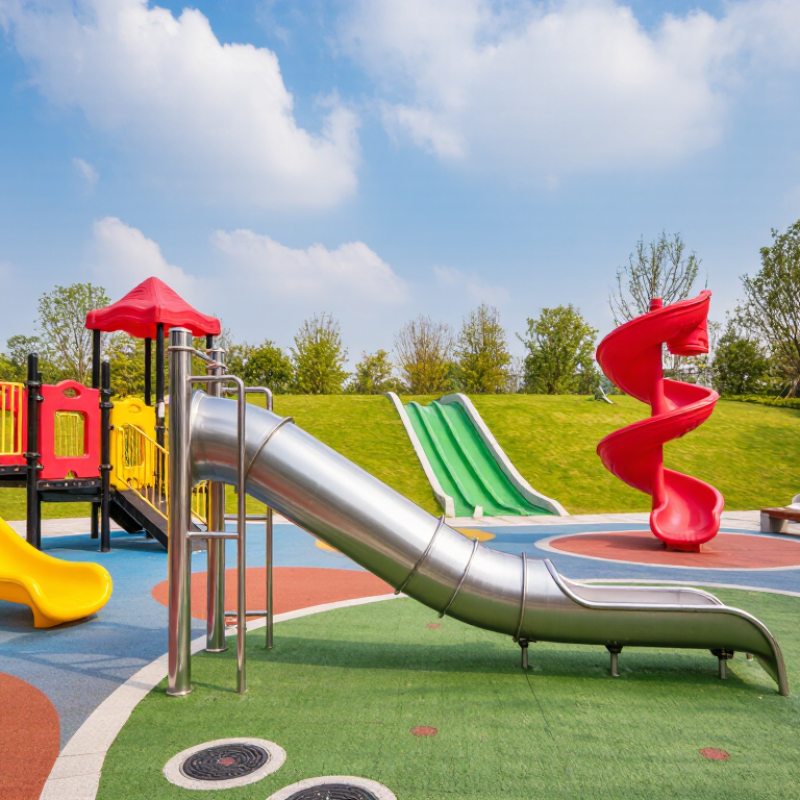
Straight slides remain popular because they are simple, visible, and easy to supervise. They suit compact playgrounds and younger children. A gentle slope, wide entry, and raised sidewalls can support safer movement. Buyers should check platform height, exit clearance, and surface temperature in sunny regions. Small details matter.
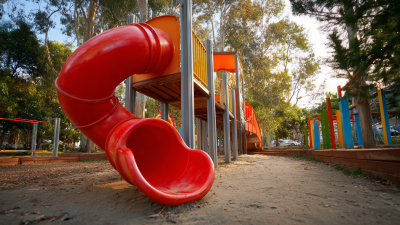
Wave slides create changing speeds through curved sections. They offer more movement without requiring a very tall structure. Spiral slides use a tighter turning path and need careful spacing around the exit. Their enclosed shape may reduce visibility, so nearby adults need clear sightlines. Tunnel slides add visual excitement, but ventilation and interior lighting deserve attention.
For early-age areas, low slides with broad steps and short chutes can reduce climbing difficulty. Embankment slides work well on landscaped sites and may blend naturally with parks. Stainless steel can provide a smooth surface, while molded plastic often offers colorful shapes and lower touch temperatures. Still, material choice depends on climate, maintenance, and local standards. A bright slide is not automatically a practical slide.
Global buyers should review drainage, anchoring, load capacity, and replacement-part access before ordering. Installation quality can change performance significantly. Some layouts look efficient on paper but feel crowded in real use. That deserves a second review. Inspectors should also assess fall zones, handrails, sharp edges, and age separation during site planning.
Outdoor Play Slide Types and Their Core Features
| Slide Type | Typical User Age | Typical Platform Height | Typical Slide Length | Common Materials | Core Features | Space and Installation Needs | Best-Fit Applications | Key Buying Considerations |
|---|---|---|---|---|---|---|---|---|
| Straight Slide | 2–8 years | 0.6–1.8 m | 1.8–3.6 m | Rotomolded polyethylene, stainless steel, powder-coated steel, or treated timber | Simple linear descent, easy supervision, low moving-part count, and broad compatibility with modular play towers | Compact footprint; requires a clear exit zone and impact-attenuating surfacing | Schools, public parks, residential communities, and childcare settings | Platform height, edge protection, exit run-out, UV resistance, drainage, and cleaning access |
| Wave Slide | 3–10 years | 0.9–2.1 m | 2.4–4.5 m | UV-stabilized polyethylene or fiberglass-reinforced plastic with metal supports | Undulating sliding path, increased play value, and moderate speed variation | Needs more horizontal clearance than a straight slide and a carefully designed landing area | Medium-sized playgrounds and mixed-age play zones | Smooth transitions, molded seams, structural support, water drainage, and resistance to deformation in heat |
| Spiral Slide | 4–12 years | 1.2–2.4 m | 3.0–5.5 m | Molded polyethylene, stainless steel, or coated steel | Helical route, compact ground footprint, enclosed side guidance, and high visual appeal | Saves ground space but requires adequate vertical clearance and a defined exit zone | Urban playgrounds, compact sites, and multi-level play structures | Internal radius, visibility, user flow, anti-static performance, and accessibility of inspection points |
| Tunnel Slide | 2–8 years | 0.6–1.8 m | 2.0–4.0 m | Rotomolded polyethylene or fiberglass-reinforced plastic | Enclosed sliding route, reduced exposure to direct sunlight, and enhanced imaginative play | Requires access for inspection, ventilation or drainage provisions, and clear supervision planning | Early-years play areas, shaded playgrounds, and themed play environments | Interior smoothness, lighting conditions, drainage, cleaning access, and visibility at entry and exit |
| Double or Parallel Slide | 3–10 years | 0.9–2.1 m | 2.4–4.5 m per lane | Polyethylene, stainless steel, coated steel, or a combination of these materials | Two simultaneous lanes, social interaction, higher throughput, and reduced waiting time | Wider installation zone with separate or adequately spaced landing areas | Busy public parks, schools, resorts, and commercial family recreation areas | Lane spacing, independent structural support, crowd flow, wear resistance, and impact-surface coverage |
| Embankment Slide | 3–12 years | Site-dependent; commonly integrated into a landscaped slope | 3.0–8.0 m | Stainless steel, polyethylene, fiberglass-reinforced plastic, or concrete with a finished sliding surface | Uses existing terrain, blends into the landscape, and can provide multiple access routes | Requires stable earthworks, erosion control, drainage, retaining measures, and substantial land area | Nature-based parks, large schools, resorts, and recreational landscapes | Slope stability, runoff management, surface temperature, accessibility, and long-term landscaping maintenance |
| Roller Slide | 5–12 years | 1.2–2.1 m | 2.5–4.5 m | Metal rollers, stainless steel or coated steel frame, and polymer end caps | Rolling contact surface, distinctive tactile experience, and relatively low friction | Needs regular inspection of rollers, bearings, fasteners, pinch points, and landing surfacing | Adventure-oriented playgrounds and older-child activity zones | Pinch-point protection, corrosion resistance, roller spacing, noise level, and replacement-part availability |
| Wide or Inclusive Slide | 2–8 years, depending on design | 0.6–1.5 m | 1.8–3.6 m | Molded polyethylene, stainless steel, or coated steel | Broader sliding surface, side-by-side use potential, transfer-friendly access, and supportive entry design | Requires accessible routes, suitable transfer platforms, adequate maneuvering space, and compliant surfacing | Inclusive playgrounds, community parks, schools, and therapeutic recreation areas | Access route, transfer height, side containment, caregiver positioning, surface transitions, and local accessibility rules |
| Water Slide | Varies by design and facility rules; commonly 6+ years | 1.2–6.0 m | 4.0–20.0 m | Fiberglass-reinforced plastic, stainless steel, reinforced concrete, and water-resistant coatings | Water-assisted sliding, splash-zone play, and higher operational throughput when managed correctly | Needs water supply, drainage, pump and filtration systems, slip-resistant decks, and controlled access | Aquatic centers, resorts, splash parks, and supervised recreational facilities | Water quality, rider height rules, lifeguard visibility, structural load, hygiene, weather exposure, and operating cost |
Global buyer checklist: Confirm applicable regional safety requirements, critical fall height, impact-attenuating surfacing, corrosion protection, UV stability, drainage, spare parts, installation method, inspection access, warranty terms, and climate suitability before purchase.
Outdoor slides are easier to buy when classified by design before comparing prices. This sounds obvious. It is not. Straight slides suit compact playgrounds and predictable movement. Wave slides add rhythm and slightly longer descent. Spiral slides need more vertical space and careful visibility planning. Tunnel slides create a stronger sense of adventure, but staff may monitor children less easily. Wide or multi-lane slides support social play and short waiting times.
Use classification changes the decision. Preschool slides usually have lower platforms, gentler slopes, and smaller entry openings. Slides for older children can include taller towers, longer runs, and more complex movement.
The 2022 WHO Global Status Report on Physical Activity found that 81% of school-aged adolescents were insufficiently active.
A slide cannot solve that problem alone. However, combining slides with climbing nets, balance paths, and open running space can encourage repeated movement. Short play sessions still matter.
Global buyers should also classify slides by setting. Public parks need durable surfaces, clear circulation, and accessible routes. School yards need high daily capacity. Resort projects may prioritize visual impact, while residential sites often need quiet operation and compact footprints. The U.S. CPSC handbook and EN 1176 guidance remain useful reference points for fall zones, entrapment risks, and impact-absorbing surfaces. Grand View Research forecasts steady playground equipment market growth through 2030, but market growth does not guarantee better design. Some purchasing specifications remain too general. A glossy finish is not a safety feature. Weather, drainage, heat, maintenance access, and local user habits deserve closer review.
2026 Top Outdoor Play Slide Types for Global Buyers
Key Safety Standards for International Slide Buyers
Outdoor slides vary from straight and wave models to spiral and tube designs, but safety must guide every purchase. International buyers should check whether the product follows recognized standards, such as EN 1176 or ASTM F1487. These standards address structure, entrapment risks, sharp edges, impact areas, and user age groups. Local requirements may differ, so a supplier’s certificate should not be treated as universal approval.
In practical inspections, buyers should examine the slide’s fall zone, handrails, access steps, and platform barriers. The surface needs stable anchoring and enough impact-absorbing material beneath exit areas. Check stainless fasteners, UV-resistant plastic, and drainage openings after heavy rain. Ask for load data, installation drawings, maintenance schedules, and inspection records. A certificate alone is not enough. Installation quality can still create hazards.
Tips: Measure the site before ordering. Confirm the intended age range. Request samples or close-up photos of seams and edges. Keep written records of testing dates. Do not accept vague claims like “international standard” without a named standard and report. Recheck bolts after installation and during seasonal maintenance. Some details are easy to miss. Even experienced buyers can overlook heat buildup on dark surfaces or slippery exits after cleaning. That deserves a second review.
Key safety standards commonly referenced by international playground-equipment buyers. The chart shows the publication year of the listed standard edition, not a safety ranking.
Efficient for compact layouts and high-throughput playground zones. Buyers should verify platform height, guardrails, exit design and impact-attenuating surfacing.
Suitable for added variation in play movement. Check the complete sliding path, transitions, side containment and user fall zones.
Useful where vertical space is limited. International buyers should confirm internal clearances, visibility, entry protection and safe exit geometry.
Provide an enclosed play experience. Confirm ventilation, visibility, entrapment prevention, structural strength and cleaning access.
Reference editions shown: EN 1176-1:2017+A1:2023, ASTM F1487-21, AS 4685.1:2021, CSA Z614:20 and ISO 8124-4:2010. Buyers should confirm the latest adopted edition and local regulatory requirements before procurement or installation.
Outdoor slides must match their climate, not only their playground design. Rotational-molded HDPE resists moisture, impact, and many cleaning chemicals. Stainless steel offers strong structural performance in humid or coastal areas. However, exposed metal can become dangerously hot under intense sunlight. Shade planning remains essential.
Cold regions need materials that stay tough during freeze-thaw cycles. Rubber components should remain flexible at low temperatures. In tropical climates, UV-stabilized plastics and corrosion-resistant fasteners deserve closer inspection. Powder-coated steel can perform well, but scratches may expose the base metal. No material is maintenance-free. That point is easy to overlook.
Global buyers should compare service life, not just purchase price. A slide with replaceable panels may reduce long-term downtime. Smooth transitions and rounded edges support safer daily use. Independent inspection reports add useful confidence when supplier claims seem broad. Still, documents cannot replace a physical sample or site assessment. A small color-fade test in direct sunlight may reveal more than a glossy brochure.
Global buyers are comparing more than straight, spiral, tube, and wave slides in 2026. They are comparing risk, service, and usable play value. The U.S. Consumer Product Safety Commission reports over 200,000 playground-related emergency department injuries annually. That figure makes safety evidence commercially important, not decorative. Buyers should request independent test reports, material specifications, fall-height calculations, and installation instructions. EN 1176 and ASTM F1487 provide useful reference points, but certificates need careful checking. A certificate may cover one model, not every configuration.
Supplier evaluation should also examine stainless-steel thickness, UV resistance, drainage holes, edge finishing, and corrosion protection. Ask for photographs of welds and the underside of platforms. Small details matter. A tube slide with poor ventilation can become extremely hot, while a steep spiral slide may reduce accessibility for younger children. The World Health Organization links active play with children’s physical and mental wellbeing, so product value should include movement variety, not only appearance. Market research from Grand View Research forecasts continued growth in playground equipment demand through 2030, increasing supplier competition. That growth can improve choice, but it can also encourage exaggerated claims. I would compare warranty terms, replacement-part availability, packaging strength, and installation training beside the purchase price. A low quote may hide difficult maintenance. My own caution is simple: digital brochures rarely show long-term fading, loose fixings, or drainage failures after heavy rain. Reliable buyers should ask for project references in similar climates and review documented maintenance records before selecting a supplier.