2026 Best Outdoor Playground Slide Types for Global Buyers
Choosing the right Outdoor Playground Slide in 2026 requires more than comparing colors, prices, and advertised heights. Global buyers must examine climate, user age, installation surfaces, maintenance access, and local safety requirements. A bright stainless-steel slide may suit a coastal park, yet become uncomfortably hot under intense sunlight. A molded plastic slide may resist corrosion, but ultraviolet exposure can weaken poor-quality materials.
Industry evidence supports a careful, practical approach. Grand View Research’s Playground Equipment Market Size, Share & Trends Analysis Report identifies rising demand for inclusive, durable, and professionally designed play environments. The U.S. Consumer Product Safety Commission’s Public Playground Safety Handbook also highlights fall zones, entrapment risks, guardrails, and surfacing as critical design considerations. EN 1176 and ASTM F1487 provide additional benchmarks for buyers working across international markets. Standards differ. That creates avoidable confusion.
Dr. Mariana Brussoni, a leading researcher in child development and injury prevention, defines risky play as “thrilling and exciting forms of play that involve uncertainty and a risk of physical injury.” Her research reminds buyers that challenge should not disappear from playground design. It should be managed intelligently. This guide compares straight, wave, spiral, tube, tunnel, and embankment slide types for different climates, sites, budgets, and age groups. It also considers real purchasing details, including drainage holes, rounded edges, replacement panels, delivery limits, and inspection routines. No single slide wins everywhere. Some claims in supplier catalogs still deserve closer testing.

What Defines an Outdoor Playground Slide in 2026
What Defines an Outdoor Playground Slide in 2026
An outdoor playground slide is more than a tall platform and a smooth chute. It is a complete movement system. The system includes access steps, handrails, guardrails, climbing routes, the sliding surface, and impact protection. Current safety thinking also considers heat, drainage, visibility, and maintenance access.
The WHO Guidelines on Physical Activity and Sedentary Behaviour recommend at least 60 minutes of moderate-to-vigorous activity daily for children aged 5–17. A slide can support that target, but it cannot create healthy play alone. Buyers should assess whether children can climb, balance, wait, turn, and return safely. ASTM F1487-21 and EN 1176 guidance emphasize entrapment prevention, fall zones, structural strength, and equipment inspection. These details define quality more reliably than bright colors or height.
A common mistake is treating accessibility as an optional feature. It is not. A well-planned slide area may include transfer platforms, wider circulation paths, and varied approach routes. These choices help more children participate, although no single design serves every need. The CPSC Public Playground Safety Handbook also stresses suitable protective surfacing and regular inspections.
Tips:
Check the slide’s surface temperature during peak sun. Measure the fall zone on site, not only from drawings. Ask for maintenance records, drainage details, material specifications, and test documentation. Leave room for doubt. Local climate and daily use may expose weaknesses that factory images never show.
How Outdoor Playground Slides Are Classified by Design
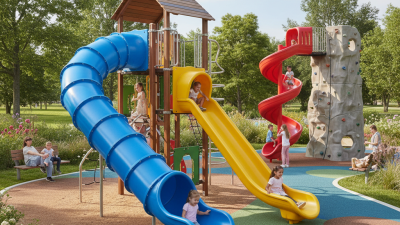
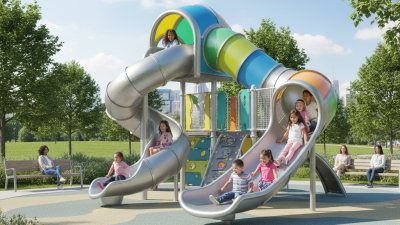
Outdoor playground slides are best classified by design, not by color or marketing labels. For global buyers, this approach makes specifications easier to compare. Straight slides use a direct chute and need less installation space. Wave slides add vertical movement and create a more active ride. Spiral slides turn around a central post, making efficient use of limited platforms. Tube slides create an enclosed route with reduced visual contact. Visibility changes.
Multi-lane slides support side-by-side use and can reduce waiting during busy periods. A hillside slide follows the natural slope, often lowering the need for tall support towers. Some designs combine tunnels, curves, climbing walls, or multiple exits. These are not interchangeable. Each layout affects supervision, user flow, and the required fall zone.
The slide material also influences the design choice. Molded plastic usually feels warmer and allows complex curves, while metal can offer a firm, fast surface. Local climate matters. Dark surfaces may become uncomfortable under strong sunlight, and poor drainage can leave water near the exit. During site reviews, I check platform height, guardrails, exit clearance, surface temperature, and anchor details. I have seen attractive slides placed too close to fencing. A design can look safe on paper yet feel awkward during real use. One overlooked issue is cleaning access. Small details matter. No design is perfect. Careful buyers should match the slide category with age groups, supervision needs, maintenance skills, and local safety requirements.
2026 Best Outdoor Playground Slide Types for Global Buyers
How Outdoor Playground Slides Are Classified by Design
Outdoor playground slides are commonly classified by their slide path, enclosure, and user arrangement.
Straight and wave slides use an open descent, spiral slides curve continuously, tunnel slides provide an enclosed passage,
and double slides allow two users to slide in parallel. The chart uses a design-feature matrix, where 1 indicates that the feature
is a defining characteristic of the slide type and 0 indicates that it is not.
Which Materials and Safety Features Shape Slide Selection
2026 Best Outdoor Playground Slide Types for Global Buyers
Material choice shapes both service life and daily safety. Rotationally molded HDPE slides resist rust, tolerate coastal air, and feel less harsh under direct sunlight. Stainless steel slides offer strong vandal resistance and a fast, smooth ride, but they can become dangerously hot without shade. Galvanized steel supports heavy commercial use, although damaged coatings require prompt repair. Small details matter. Smooth seams matter.
The U.S. Consumer Product Safety Commission reports roughly 200,000 playground-related emergency department injuries among children each year. Its Public Playground Safety Handbook emphasizes fall height, protective surfacing, openings, and entrapment risks. Buyers should therefore specify deep engineered wood fiber, rubber surfacing, or another tested impact-attenuating system beneath every exit. ASTM F1487 and EN 1176 also guide equipment design, spacing, guarding, and access requirements. Local installation rules still need verification.
I would not select a slide by material alone. A shaded stainless chute may outperform exposed plastic in one climate, while UV-stabilized HDPE may suit another. Look for high sidewalls, secure handrails, rounded edges, controlled exit speed, drainage holes, and tamper-resistant fasteners. Check surface temperatures during peak afternoon hours. Real site testing is often skipped. That is a mistake. Maintenance access, replacement-part availability, and inspection records can influence safety more than a glossy specification sheet.
How Site, Climate, and Age Range Determine the Best Slide Type
Outdoor slide selection starts with the site, not the catalog. A compact straight slide suits toddlers because its lower height supports easier supervision. Older children often enjoy wave, spiral, or tunnel slides with stronger physical challenges. Measure the fall zone carefully, especially near fences, trees, and walkways. A small mistake can change the whole layout.
Hot climates can make metal surfaces dangerously warm during afternoon play. Choose shaded layouts, heat-resistant materials, and slides positioned away from direct sunlight. In rainy regions, prioritize strong drainage and textured access steps. Coastal sites require corrosion-resistant components and frequent inspections. I have seen beautiful installations fail because water collected beneath the platform. Climate planning is not optional. Yet, no universal slide works everywhere.
Tips: Ask suppliers for tested temperature, load, and material information. Request drawings showing platform height and required clearance. Check whether the proposed design matches local playground safety requirements. Observe children’s likely behavior, not only the advertised age range. Younger users may need wider steps and shorter slides. Older users may expect speed, but speed must remain manageable. Installation and inspection should involve qualified professionals. Keep written maintenance records, even when the equipment looks fine. Reconsider the design after the first season; real site experience often reveals details planning missed.
How Global Buyers Compare Compliance, Installation, and Long-Term Value
2026 Best Outdoor Playground Slide Types for Global Buyers
Global buyers should compare slides by risk control, installation conditions, and service life. A straight slide suits compact spaces and simpler foundations. Wave and spiral slides create stronger visual appeal, but their curves require careful assembly and inspection. Tunnel slides offer shade and sensory interest, yet cleaning access can be less convenient.
The U.S. Consumer Product Safety Commission reports that more than 200,000 children receive emergency treatment annually for playground-related injuries. Its Public Playground Safety Handbook also identifies falls as the leading injury mechanism, representing about 79% of reported cases. These figures make impact-attenuating surfacing, guardrails, exit zones, and accurate anchoring commercial priorities. Buyers should request test documents against relevant standards, such as ASTM F1487 or EN 1176, depending on the destination market. Certification alone is not enough. Poor drainage or uneven concrete can weaken a compliant design.
Tips: Ask for installation drawings, foundation dimensions, surface specifications, spare-part availability, and inspection guidance. Check whether local crews can assemble the slide without special tools. A stainless-steel slide may resist corrosion better in coastal climates, but its higher purchase cost needs lifecycle comparison. Plastic slides can feel warmer under direct sun. This detail is easy to miss. I would also leave budget for inspections, because long-term value is often lost after handover. The numbers help, but the site conditions decide.
 +86-13901441113

 CONTACT NUMBER
 CONTACT NUMBER