+86-13901441113

Leave Your Message
-
CONTACT NUMBER
-
 CONTACT NUMBER
-
 CONTACT NUMBER
China has become a major sourcing base for commercial playground equipment, including the Outdoor Play Slide. Grand View Research estimates that the global playground equipment market will continue expanding through 2030, supported by urban development, school investment, and family recreation demand. The figure is encouraging, but market growth alone does not prove product quality.
A reliable manufacturer should show more than polished factory photographs. Buyers need material specifications, load testing records, production inspection procedures, and clear installation guidance. Stainless-steel platforms, UV-resistant HDPE panels, rounded slide edges, and concealed fasteners matter in daily use. A good Outdoor Play Slide should also suit local climate conditions, site dimensions, user ages, and maintenance capabilities. Standards such as ASTM F1487 and EN 1176 provide useful safety references, although buyers must confirm the requirements applicable in their destination market.
As playground scholar Dr. Joe L. Frost stated, “Play is the business of childhood.” That principle keeps the discussion practical. A slide must create excitement, yet it must also support safe movement, predictable exits, and comfortable supervision. The U.S. Consumer Product Safety Commission identifies falls as a leading playground injury concern, making surfacing and layout essential purchasing considerations. Experienced Chinese manufacturers can provide customization, container planning, sample approval, and batch quality control for global buyers. However, “factory direct” should never mean “trust without evidence.” Some suppliers still underexplain testing limits or maintenance needs. Careful buyers should ask harder questions, compare technical documents, and inspect production details before placing large orders.
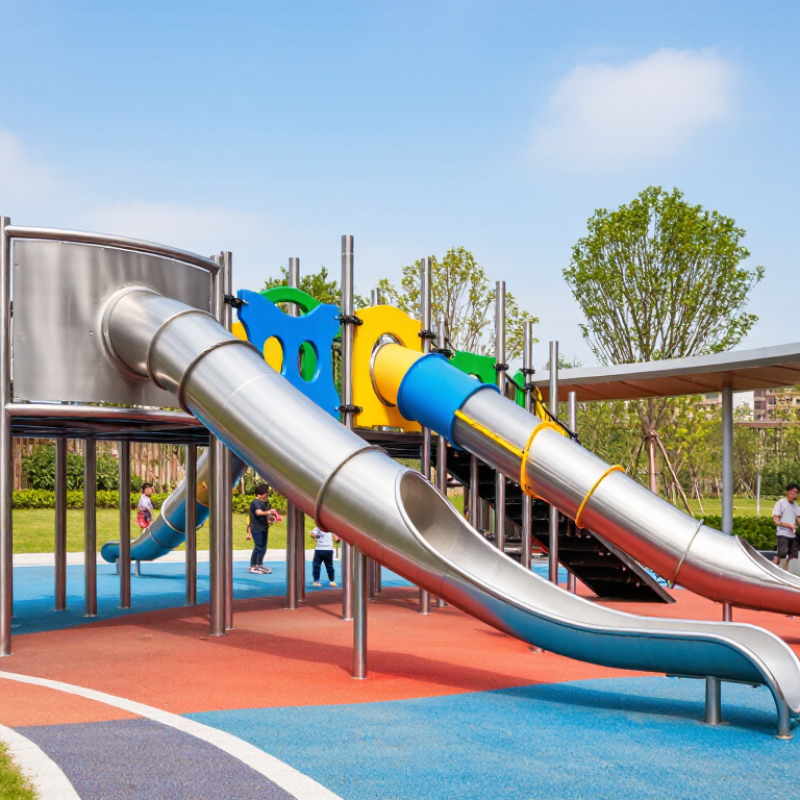
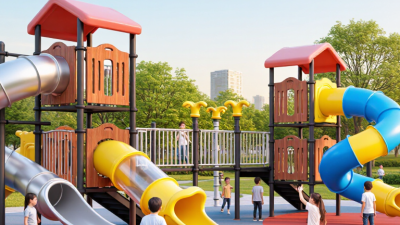
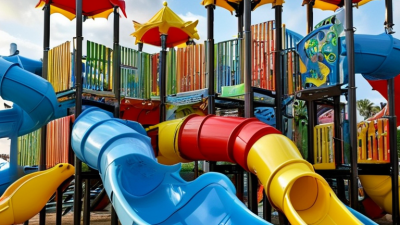
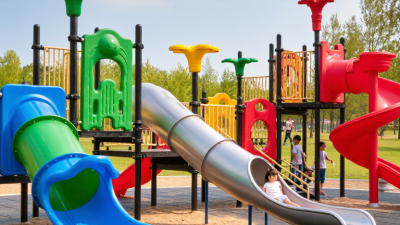
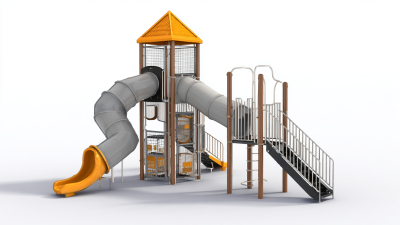
A leading outdoor play slide manufacturer in China is defined by more than production capacity. Real experience appears in small details, such as rounded edges, stable platforms, and drainage holes that prevent standing water. Engineers should understand child movement, impact areas, weather exposure, and installation conditions.
Reliable manufacturers select UV-resistant plastics, corrosion-resistant fasteners, and strong steel frames. Material certificates and batch records help buyers verify consistency. Each slide should pass practical inspections for load strength, surface smoothness, gaps, anchoring, and dimensional accuracy. Factory teams should also explain testing methods clearly, instead of hiding behind attractive catalog images.
Communication is another important measure. A professional supplier confirms playground dimensions, user age ranges, climate conditions, packaging needs, and installation plans before quoting. Factory inspection photos can show welding points, thickness measurements, and protective coatings. After delivery, clear manuals and replacement-part support reduce maintenance problems.
No factory gets every detail right. That is worth admitting. A quotation may look competitive, yet unclear tolerances can create installation delays. Buyers should request samples, inspection records, and realistic production schedules. A capable manufacturer welcomes those questions and records corrective actions when problems appear. That habit demonstrates accountability, not just sales confidence.
| Evaluation Dimension | Objective Benchmark or Requirement | Recommended Verification Evidence | Why It Matters to Global Buyers |
|---|---|---|---|
| Product Safety Design | Outdoor slides should be designed and evaluated against EN 1176-1 and the slide-specific requirements of EN 1176-3, or the applicable safety standard in the destination market. | Technical drawings, risk-assessment records, inspection reports, and independent laboratory test documentation. | A documented safety process reduces installation, liability, and market-entry risks. |
| Fall-Zone Protection | The slide layout should define the required use zone and fall zone according to the selected safety standard and the equipment’s free height of fall. | Scaled site plans, installation drawings, free-height-of-fall calculations, and surfacing specifications. | Correct spacing and surfacing are essential for reducing injury severity around the slide. |
| Impact-Attenuating Surfacing | Protective surfacing should be tested for critical fall height under ASTM F1292 or the applicable EN 1177 requirements. | Current surfacing test reports showing critical fall height, head injury criterion, and g-max results. | Different surfacing materials perform differently in wet, cold, hot, and heavily used conditions. |
| Material Selection | Common outdoor slide materials include UV-stabilized rotational-molded polyethylene, stainless steel, galvanized steel, and powder-coated steel. | Material certificates, technical data sheets, coating specifications, and sample approval records. | Material selection affects weather resistance, impact performance, maintenance frequency, and service life. |
| UV and Weather Resistance | Plastic components should use UV-stabilized material, while coatings and finishes should be specified for prolonged outdoor exposure. | Accelerated weathering test records based on ISO 4892-3 or equivalent applicable testing methods. | UV exposure can cause fading, embrittlement, cracking, and premature replacement of outdoor components. |
| Corrosion Protection | Metal parts should have a corrosion-control system suitable for the local climate, including coastal, humid, industrial, or freeze-thaw environments. | Galvanizing or coating specifications, salt-spray test records based on ISO 9227, and maintenance instructions. | Effective corrosion protection helps preserve structural integrity and appearance during long-term outdoor use. |
| Structural Strength | The structure should be checked for static loads, dynamic loads, stability, anchoring, and foreseeable misuse according to the destination-market standard. | Structural calculations, load-test results, weld inspection records, and foundation or anchoring drawings. | Verified structural performance is critical for high-traffic public playgrounds and institutional projects. |
| Entrapment and Pinch-Point Control | Openings, gaps, moving interfaces, and access points should be assessed to prevent head, neck, finger, clothing, and foot entrapment. | Safety inspection checklist, dimensional drawings, prototype inspection, and third-party compliance report. | Entrapment prevention is a core requirement for child safety and public procurement approval. |
| Surface Finish and Edges | Accessible surfaces should be smooth, rounded, free from sharp edges, protrusions, burrs, and exposed hazardous fasteners. | Pre-shipment inspection records, product photographs, sample approval, and assembly inspection procedures. | Consistent finishing reduces cuts, snagging hazards, complaints, and post-installation repairs. |
| Drainage and Water Management | Slide beds, platforms, and enclosed sections should prevent persistent water accumulation and allow practical cleaning and drainage. | Product drawings, drainage details, installation instructions, and prototype water-flow inspection. | Good drainage limits corrosion, algae growth, staining, freezing damage, and slip hazards. |
| Manufacturing Quality Control | A reliable production system should include incoming-material inspection, in-process checks, final inspection, traceability, and corrective-action procedures. | Quality manual, inspection plans, batch records, nonconformity reports, and factory-audit documentation. | Process control is more dependable than evaluating quality from a single product sample. |
| Factory Management System | ISO 9001 provides a recognized framework for quality-management processes; certification should be verified for scope and validity. | Valid certificate, certification scope, audit status, and certificate verification record. | A documented management system supports consistent production and controlled changes. |
| Customization Capability | Customization should cover slide height, configuration, colors, access platforms, site constraints, and destination-market compliance without compromising safety. | Approved drawings, 3D layouts, engineering-change records, prototypes, and revised compliance documents. | A controlled design process enables project-specific solutions while maintaining safety performance. |
| Installation Documentation | Each product should be supplied with assembly instructions, foundation details, use-zone requirements, inspection guidance, and maintenance information. | Complete installation manual, parts list, anchoring plan, torque requirements, and maintenance schedule. | Clear documentation helps local contractors install the equipment correctly and safely. |
| Inspection and Maintenance | The supplier should provide routine, operational, and annual inspection guidance, including checks for loosened fasteners, wear, corrosion, cracks, and surfacing performance. | Inspection checklist, spare-parts list, maintenance intervals, and replacement procedures. | Planned maintenance extends product life and helps operators identify hazards early. |
| Export and Compliance Support | The supplier should identify the applicable requirements for the destination market, such as EN 1176 in Europe or ASTM F1487 for public-use playground equipment in the United States. | Market-specific compliance matrix, test reports, certificates, labeling information, and technical file. | Early compliance planning reduces customs, tender, inspection, and installation delays. |
| Packaging and Transport Protection | Packaging should protect molded parts, coated surfaces, hardware, and structural components from moisture, impact, abrasion, and deformation during transport. | Packing specifications, loading photographs, moisture protection details, spare-hardware policy, and shipment inspection records. | Proper packaging lowers the risk of concealed damage and installation-stage shortages. |