Leave Your Message

10 Best Outdoor Playground Slides for Commercial Buyers

Choosing the right Outdoor Playground Slide requires more than comparing colors, prices, and catalog photographs. Commercial buyers must assess safety, durability, user age, installation demands, and long-term maintenance. A slide may look impressive beside a busy park, yet perform poorly under constant sunlight, rain, sand, and heavy daily use. The best options balance smooth movement with secure platforms, strong handrails, stable supports, and carefully finished edges.

This guide reviews ten leading slide types for commercial playground projects. It considers rotational molding, stainless steel, fiberglass, and other practical materials. Each choice is examined through real purchasing concerns, including cleaning, drainage, replacement parts, surface temperature, and inspection access. Regional standards and supplier documentation also deserve close attention. A familiar certification label does not replace professional site planning or competent installation.

No slide is perfect.

Even reliable equipment can develop faded surfaces, loose fasteners, or unexpected wear. That reality matters when planning budgets and maintenance schedules. Experienced buyers should request load ratings, warranty terms, installation instructions, and proof of material quality before placing an order. They should also consider the children using the space, including different ages, abilities, confidence levels, and play habits. A compact slide may suit a childcare center, while a taller model could serve a large municipal park. The final decision should reflect evidence, not attractive marketing alone. Some recommendations may change after a site visit. That is worth remembering.
10 Best Outdoor Playground Slides for Commercial Buyers

Types of Commercial Outdoor Playground Slides

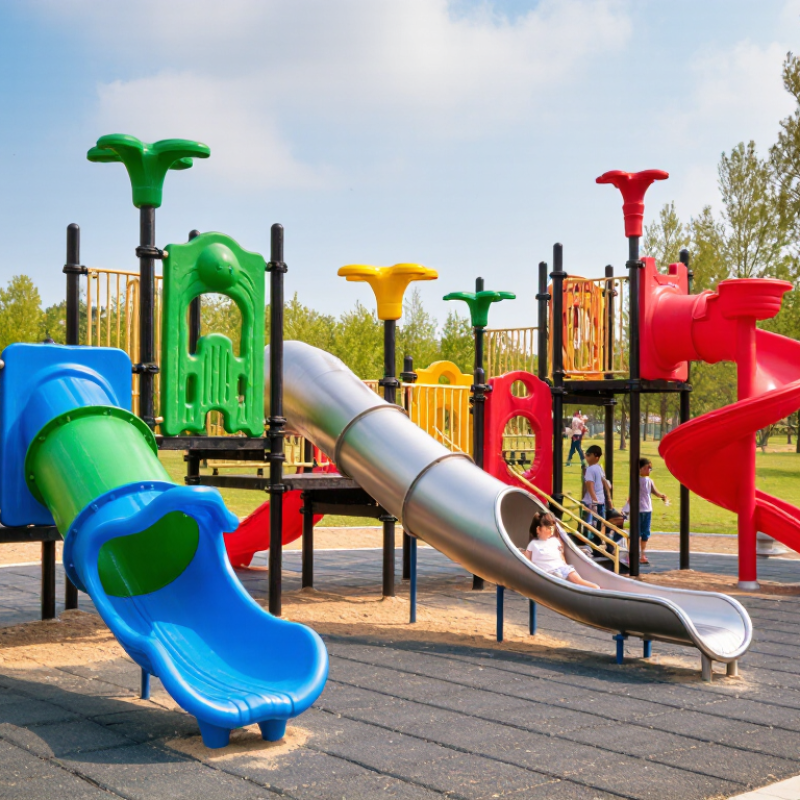
Commercial outdoor playground slides come in several forms, and each suits a different play environment. Straight slides offer predictable movement and easy supervision. They work well beside climbing platforms and compact play towers. Wave slides add gentle changes in direction without demanding advanced coordination. Children often find them more exciting than flat slides.

Spiral slides use a curved, enclosed, or open design to create a slower descent. They need more vertical space and careful access planning. Tunnel slides provide shade and reduce visual distractions, but staff should inspect dark areas regularly.

Embankment slides fit naturally into sloped landscapes. They can reduce platform height, although drainage and ground stability require close attention.

Material also changes the slide experience. Stainless steel delivers a smooth surface and strong impact resistance. Rotomolded plastic feels warmer and supports rounded, imaginative designs. Fiberglass may suit custom shapes, but cracks can be difficult to notice without trained inspection. I have seen attractive layouts fail because the exit zone was too short. That detail matters.

Choose slide types by age range, traffic level, fall height, and available space. A busy public park may need separate slides for toddlers and older children. Guardrails, handholds, surfacing, and clear sightlines deserve equal attention.

Maintenance is not optional. Bolts loosen. Surfaces fade. Small defects grow quickly. A practical inspection record helps teams respond before a minor issue becomes a closure.
Key Safety Standards for Selecting Playground Slides

Commercial playground buyers should treat safety standards as a selection filter, not a final inspection task. A slide may look sturdy while hiding sharp edges or unsafe openings. Check whether it meets the current playground standard required in its installation region, such as ASTM F1487 or EN 1176. Certification documents should identify the tested model, materials, and manufacturing date. Generic compliance claims are weak evidence.

Measure the slide’s platform height and confirm the required protective surfacing beneath the exit. Engineered wood fiber, rubber tiles, and poured surfaces perform differently under impact. Ask for tested critical fall height data, installation instructions, and maintenance intervals. Inspect handrails, guardrails, entry barriers, and exit zones. There should be no finger entrapment points, exposed bolts, unstable steps, or gaps that can catch clothing. Stainless or corrosion-resistant hardware is valuable near coastal sites, but it still needs regular inspection. I have seen well-designed slides fail because drainage was overlooked.

Tips: Request a pre-installation drawing showing fall zones and access paths. Check surface depth after heavy rain or seasonal use. Test the exit area for smooth transitions and standing water. Keep inspection records with dates, photos, and corrective actions. Avoid choosing the lowest bid without comparing material thickness, warranty limits, and replacement access. One detail is easy to miss: shade can reduce heat, but it does not replace temperature checks on metal or plastic surfaces. A practical review should include children’s reach, adult supervision, cleaning needs, and the reality of daily public use.

10 Best Outdoor Playground Slides for Commercial Buyers - Key Safety Standards for Selecting Playground Slides

This chart compares ten common commercial playground slide formats by typical platform height. Platform height is a primary factor when evaluating fall height, protective surfacing, guardrails, access points, and the required use zone. The height bands are generic planning values and are not tied to any company or brand.

Commercial buyers should verify each design against the current requirements of ASTM F1487, CPSC playground safety guidance, accessibility regulations, local building codes, and applicable impact-attenuating surfacing standards. Confirm guardrails, transition areas, entrapment protection, slide exits, hardware, drainage, inspection access, and age-appropriate use before purchase.

Material and Design Features That Improve Durability

10 Best Outdoor Playground Slides for Commercial Buyers

Material and Design Features That Improve Durability

Commercial slides face ultraviolet light, rain, sand, and thousands of daily descents. CPSC injury data identifies falls as the leading playground injury mechanism. That makes platform stability, guardrails, and impact-absorbing surfacing essential, not decorative. ASTM F1487 evaluates structural integrity, entrapment risks, sharp edges, and access points. Buyers should request current compliance documentation before comparing prices.

Choose slides made from UV-stabilized polyethylene, stainless steel, or powder-coated steel. Rotationally molded plastic reduces seams and hidden weak points. Stainless fasteners resist rust around wet decks. Look closely at the exit zone. A rounded, reinforced lip prevents cracking where children repeatedly land. Drainage holes also matter. Standing water quietly accelerates corrosion and freeze damage.

CPSC guidance recommends engineered protective surfacing beneath elevated equipment. For a seven-foot fall height, its handbook lists nine inches of loose-fill material, with greater depth required at higher elevations. Surface depth changes over time. Maintenance crews should check displacement beneath slide exits and busy transfer points. In practice, thick plastic alone does not guarantee long service life. I have seen durable slides fail early because exposed bolts loosened or shaded water stayed trapped inside the structure. That detail deserves more attention.

10 Best Outdoor Playground Slides for Commercial Buyers - Material and Design Features That Improve Durability
Rank Slide Type Recommended Platform Height Primary Construction Materials Durability-Improving Design Features Safety and User Features Best Commercial Application Maintenance Profile Overall Suitability
1 Stainless-Steel Straight Slide 1.2–2.4 m 304 stainless steel chute; galvanized or powder-coated steel support frame Continuous welded seams, rolled edges, reinforced exit section, corrosion-resistant fasteners Fast, predictable sliding path; high side walls; suitable for frequent daily use Busy public parks, municipal playgrounds and school play areas Low
Routine cleaning and inspection of welds, edges and anchors
★★★★★
2 Rotomolded Plastic Straight Slide 0.9–1.8 m UV-stabilized, rotationally molded polyethylene; galvanized steel hardware One-piece construction, thick impact-resistant walls, rounded transitions and concealed mounting points Smooth surfaces, low heat transfer compared with exposed metal, gentle exit angle General-purpose commercial play structures and childcare settings Low
Wash periodically and check for fading, cracks and loose hardware
★★★★★
3 Double-Wall Spiral Slide 1.5–2.4 m UV-stabilized polyethylene or fiberglass-reinforced polymer; powder-coated steel frame Double-wall shell, enclosed center support, molded joints and protected connection hardware Controlled spiral movement, partially enclosed profile and broad exit zone Adventure playgrounds where space efficiency and visual impact are priorities Moderate
Inspect interior surfaces, joints and drainage points
★★★★★
4 Wave Slide 0.9–1.8 m Rotomolded polyethylene or molded fiberglass; stainless or galvanized fixings Thick molded profile, integrated ribs beneath the chute and rounded wave transitions Moderate speed with varied movement; wide entry and impact-reducing exit Mixed-age playgrounds and compact commercial play systems Low
Check the wave sections for wear, deformation and surface damage
★★★★☆
5 Embankment Slide Ground-level to 1.5 m Stainless steel or UV-resistant polyethylene; concrete or compacted-earth installation base Minimal elevated framing, buried side supports, reinforced entrance and vandal-resistant anchors Reduced fall height, easy access from a slope and broad landing area Natural playgrounds, parks and sites with existing terrain Low
Maintain drainage, inspect slope stability and clean the chute
★★★★☆
6 Tube Slide 1.2–2.4 m UV-stabilized polyethylene, fiberglass-reinforced plastic or stainless steel Enclosed modular sections, internal support rings, sealed joints and tamper-resistant fasteners Enclosed route, reduced side fall exposure and protection from crosswinds High-traffic playgrounds requiring a compact footprint Moderate
Inspect inside the tube, joints, ventilation and drainage
★★★★☆
7 Wide Two-Lane Slide 1.2–1.8 m Stainless steel or UV-stabilized polyethylene; galvanized structural steel Independent lane reinforcement, continuous side rails, anti-flex mounting plates and reinforced exit Supports side-by-side play; wide entry improves supervision and throughput Schools, recreation centers and playgrounds with high user turnover Low
Check lane alignment, edges, fasteners and platform connections
★★★★☆
8 Stainless-Steel Roller Slide 1.2–1.8 m Stainless-steel rollers, stainless or galvanized frame, UV-resistant polymer side panels Replaceable roller modules, corrosion-resistant bearings, reinforced side rails and modular assembly Tactile rolling surface; broad, low-angle exit helps reduce abrupt stopping Sensory play areas and supervised commercial playgrounds Moderate
Clean rollers and inspect bearings, gaps, side rails and fixings
★★★★☆
9 Accessible Transfer Slide 0.6–1.2 m UV-stabilized polyethylene or stainless steel; powder-coated steel access structure Low platform height, reinforced transfer area, rounded edges and corrosion-resistant hardware Designed for easier transfer from accessible platforms; wide approach and stable handholds Inclusive playgrounds and facilities serving users with varied mobility Low
Inspect transfer surfaces, handholds, edges and accessible routes
★★★★☆
10 Long Stainless-Steel Slide 1.8–3.0 m 304 stainless steel chute; galvanized steel tower, braces and platform frame Longitudinal reinforcement, intermediate supports, polished or satin-finished seams and heavy-duty anchors Extended ride length, high side walls and engineered transition into the run-out zone Large destination playgrounds and high-capacity public recreation sites Low
Inspect support anchors, seams, run-out and surrounding surfacing
★★★★☆

How to Match Slides With Age Groups and Play Spaces

Choosing among the 10 best outdoor playground slides starts with age, not appearance. The U.S. Consumer Product Safety Commission’s Public Playground Safety Handbook reports that falls cause about 79% of playground injuries. That figure makes slide height, exit speed, and surfacing critical commercial decisions. For toddlers, choose low, enclosed slides with wide entry platforms and gentle exits. Preschool users need short straight slides, clear handholds, and enough space for adult supervision.

School-age children can manage taller, faster slides, but only when the play area provides generous fall zones and separate traffic paths. ASTM F1487, the commercial playground equipment standard, emphasizes use zones around equipment and impact-attenuating surfacing. Measure the available space before selecting a slide. A curved slide may fit a compact footprint, while a tall spiral model can create congestion near its exit. Small spaces punish poor planning.

Match the slide to the whole play environment. A busy park may need multiple slides to reduce queues and unsafe climbing against traffic. Check sightlines from benches, gates, and accessible routes. CPSC guidance also stresses regular inspection, because loose hardware, worn surfacing, and sharp edges can change a safe design quickly. I have seen buyers focus on capacity and overlook supervision. That is an expensive blind spot. Age signage helps, but it cannot replace observation, maintenance records, or honest review of how children actually move through the space.

Installation, Maintenance, and Long-Term Buying Considerations

10 Best Outdoor Playground Slides for Commercial Buyers
For commercial buyers, a slide must survive daily use, changing weather, and occasional misuse. Installation begins with accurate site measurements, including fall zones, drainage paths, and surface depth. A certified installer should anchor every support according to the manufacturer’s specifications. Poor alignment can create uncomfortable bumps or dangerous gaps. It happens more often than expected.
Choose materials suited to your climate. UV-stabilized plastic can resist fading, while powder-coated metal may offer strong structural performance. However, every material has limits. Dark surfaces can become extremely hot under direct sunlight. Place slides away from reflective walls and consider shade structures near high-use areas.
Maintenance should follow a written schedule. Staff can check bolts, seams, handrails, and entry platforms each morning. Look for sharp edges, cracks, loose anchors, or unusual movement. Clean the slide with mild soap, water, and a soft brush. Abrasive cleaners may damage smooth surfaces and increase friction. Keep inspection records with dates, findings, and completed repairs. Those records support reliable decisions during busy seasons.
Tips: Reserve funds for replacement parts, professional inspections, and resurfacing. Ask suppliers about spare-part availability before purchasing. Confirm warranty terms in writing. A low purchase price may become expensive when shipping delays stop playground use. Reassess the slide after its first season, because real traffic often exposes design assumptions that looked reasonable on paper.