What Are the Best Outdoor Play Sets for Kids?
Choosing the best Outdoor Play Sets involves more than comparing bright colors, slides, and price tags. A sturdy set should support active movement, imaginative play, and safe social interaction. It should also fit your yard, your children’s ages, and your ability to inspect it regularly.
Dr. Joe L. Frost, a respected play scholar and professor emeritus, wrote, “Play is the business of childhood.” That idea matters when evaluating outdoor equipment. A climbing wall can build confidence, while a shaded platform may become a quiet reading corner. Swings encourage rhythm and balance. Different features serve different needs.
The strongest Outdoor Play Sets use durable materials, rounded edges, secure fasteners, and stable foundations. Look for clear weight limits and detailed installation instructions. Check whether the set meets recognized safety standards, such as those referenced by the U.S. Consumer Product Safety Commission. A soft, well-maintained surface below the equipment is equally important.
Still, no play set is perfect. Wood can weather, plastic can fade, and children may use equipment in unexpected ways. That requires adult supervision and honest maintenance planning. A beautiful set may fail if it overwhelms a small yard or becomes difficult to inspect. I have found that practical design often beats impressive extras.
This guide compares leading options by safety features, construction quality, age suitability, play value, and long-term upkeep. The best choice may not be the largest. It should invite movement, withstand real family life, and leave enough room for children’s own ideas.
Outdoor Play Set Types: Swings, Slides, Climbers, and Multi-Activity Units
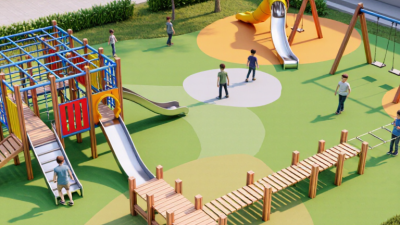
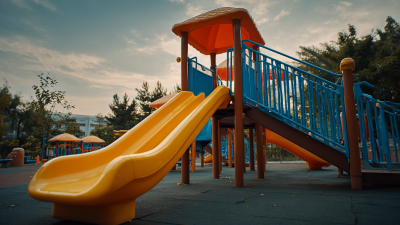
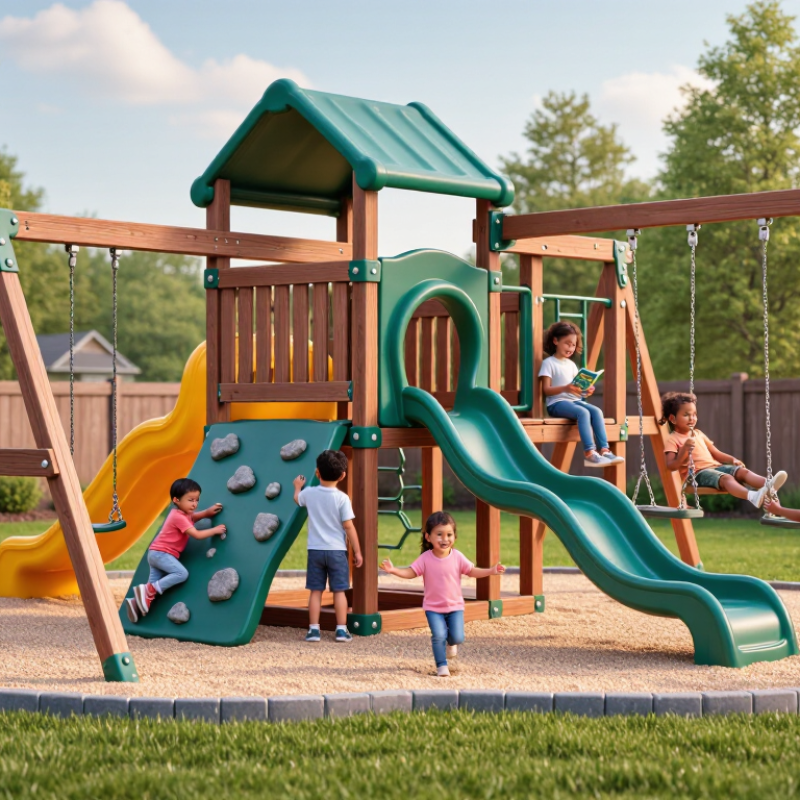
Choosing the best outdoor play set starts with how children actually play, not with the tallest tower. Swings suit children who enjoy rhythm and movement, while bucket seats help younger users feel supported. Slides add quick excitement, but a wide, gently sloped slide is easier to use and supervise. Climbers build grip, balance, and planning skills through ladders, nets, or angled walls. They need clear handholds and a fall zone with impact-absorbing material. It matters. Measure the yard before buying. Leave open space around swing paths, slide exits, and climbing sides. A crowded set can turn normal play into a collision risk.
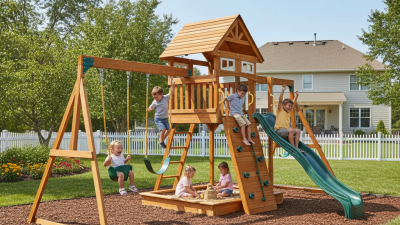
Multi-activity units combine swings, slides, and climbers in one compact structure. They work well for siblings with different interests, though one busy platform can create waiting and arguments. Look for sturdy connections, rounded edges, stable anchoring, and drainage that prevents slippery surfaces. Check bolts and ropes regularly, especially after rain, heat, or freezing weather. Keep it simple. Adult supervision still matters, even when equipment meets recognized safety standards. In my experience, children test equipment more creatively than adults expect. I once focused on the slide and overlooked how quickly a child could climb the side rail. That mistake changed my routine. I now watch entry points, landing areas, and activity changes. Children surprise us. Choose equipment that matches the youngest child’s ability, then reassess as skills and confidence grow.
Safety Standards: ASTM F1487, CPSC Rules, and 9-Inch Protective Surfacing
Choosing an outdoor play set involves more than slides, swings, and bright colors. Safety standards matter. ASTM F1487 covers public-use playground equipment and addresses structure, entrapment, sharp edges, fall zones, and installation details. Residential equipment may follow different standards, so buyers should read the manufacturer’s compliance information carefully.
CPSC guidance recommends protective surfacing beneath and around play equipment. For loose-fill materials, nine inches is commonly recommended for falls up to seven feet. Measure the depth with a ruler, not by appearance. Wood fiber, engineered mulch, and rubber materials can compress over time. Keep the surface level, dry, and free from stones or exposed roots. Extend protection around every slide exit and swing path.
Check the entire fall zone.
A practical inspection should also examine bolts, swing hangers, platforms, and gaps where clothing or fingers could catch. ASTM F1487 testing does not replace careful installation or regular maintenance. I once overlooked a shallow area beneath a climbing wall because the surrounding surface looked thick. That mistake changed my inspection routine. Standards guide decisions, but real yards shift after rain, play, and seasonal use. Keep records of depth checks and repairs. When instructions seem unclear, contact a qualified installer or consult current CPSC playground safety guidance.
Materials and Durability: UV Resistance, Weight Ratings, and Warranty Lengths
What Are the Best Outdoor Play Sets for Kids?
Materials decide whether an outdoor play set remains safe after years of sun, rain, and muddy shoes.
High-density polyethylene and powder-coated steel resist moisture, but UV exposure can still fade colors and weaken plastics.
The American Society for Testing and Materials, through ASTM F1148, requires home playground equipment to address structural integrity, openings, and user safety. That standard is useful, but it does not replace regular inspection.
Check the weight rating carefully.
It should cover the child, clothing, and movement forces, not just a seated body.
The U.S. Consumer Product Safety Commission reports more than 200,000 playground-related emergency injuries among children annually. Its Public Playground Safety Handbook also highlights corrosion, cracks, sharp edges, and unstable components as inspection concerns.
A play set that feels solid can still hide loose anchors underneath.
UV resistance needs specific evidence.
Look for stated UV stabilizers, weather-testing details, and fade or brittleness coverage.
A long warranty helps, though ten years on wood may cover rot but exclude fading, hardware, or labor.
Read the exclusions. Closely.
In practical checks, I would inspect bolts every season and test swinging movement by hand.
Manufacturer weight ratings are not always comparable, which makes shopping frustrating.
Independent test documentation would be better, but it is not always provided.
Choosing the Best Set: Space, Cost, Maintenance, Accessibility, and Safety Tests
Choosing an outdoor play set starts with space, not excitement. Measure the equipment footprint, swing arc, and a clear fall zone. CPSC guidance recommends protective surfacing beneath and around elevated equipment. Its 2023 safety reporting links playground equipment to about 200,000 emergency-room visits annually among children aged 14 and younger. Falls remain the dominant hazard. A small yard may suit a compact climber, but crowded layouts create hidden collision risks. I have seen families measure the platform, then forget the swing’s forward movement. That mistake is common.
Cost also includes anchoring, surfacing, inspections, and replacement parts. ASTM F1487 provides performance requirements for public playground equipment, offering useful benchmarks for residential buyers. Choose rounded edges, secure fasteners, and platforms with guardrails. Check wood for splinters and metal for rust every month. A simple maintenance log helps, although many owners stop recording checks after the first season. That weakens reliability.
Accessibility deserves equal attention. The ADA Standards emphasize accessible routes and usable ground surfaces in covered environments, while inclusive-play guidance supports transfer points and varied sensory experiences. For home use, consider a firm route, low-entry features, and enough turning space for mobility devices. Safety labels cannot replace supervision. Nor can a higher price guarantee better design. Ask whether children can enter, pause, and leave the set without assistance. Test it yourself. Then reconsider.
 +86-13901441113

 CONTACT NUMBER
 CONTACT NUMBER