+86-13901441113


China’s outdoor slide manufacturing sector is gaining attention from global buyers seeking durable, customizable, and competitively priced equipment. Slide Outside products now serve schools, family entertainment centers, resorts, parks, and community spaces.
Grand View Research estimates that the global playground equipment market will continue expanding through the decade, supported by urban development, family recreation, and public investment. MarketsandMarkets also identifies safety compliance, modular design, and low-maintenance materials as important purchasing factors. These reports provide useful direction, although market estimates vary by region and product definition.
The details matter. A buyer should inspect stainless-steel fasteners, rotational-molded plastic thickness, UV resistance, drainage design, and landing-zone protection. Factory experience also matters. Strong manufacturers can provide load testing, installation drawings, material certificates, and production photographs before shipment. However, a polished catalog is not proof of dependable quality.
Dr. Joe L. Frost, a respected playground researcher, described play as “the work of childhood.” His view reminds buyers that an outdoor slide is more than a colorful structure. It must create excitement without ignoring supervision, impact protection, or age-appropriate design.
That balance is easy to miss.
China offers many capable suppliers, but quality is not uniform. Buyers should compare factory audits, relevant ASTM or EN 1176 documentation, warranty terms, spare-part support, and actual project references. Certification claims also require verification through accredited laboratories. The best sourcing decision combines price, engineering evidence, user safety, and long-term service. Yet even careful evaluation cannot remove every risk. That is why practical inspection and clear communication remain essential.
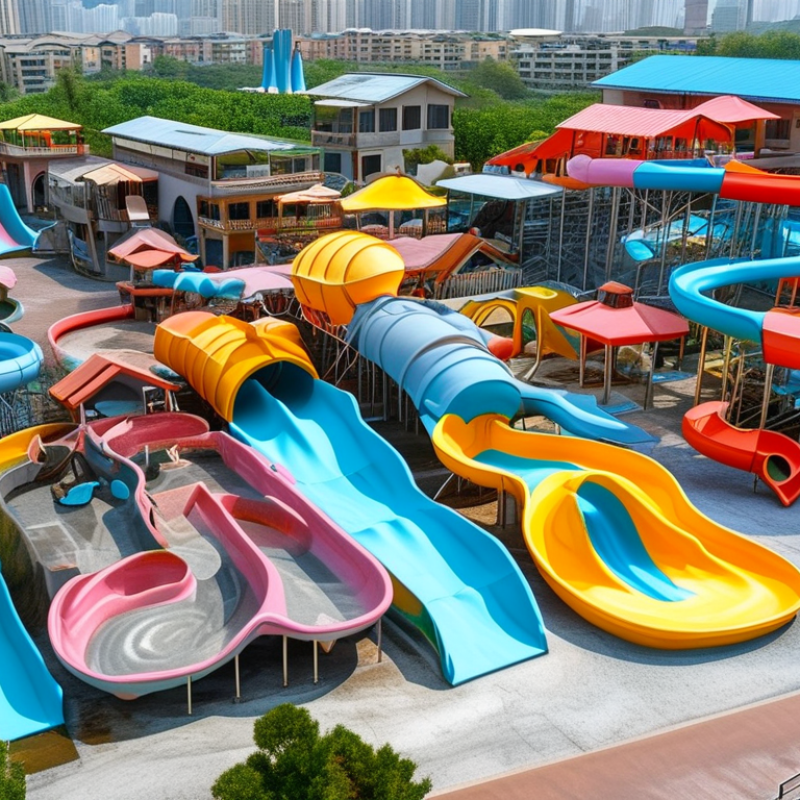
A leading Chinese outdoor slide manufacturer is defined by more than factory size or attractive pricing. It combines practical experience, controlled production, and clear communication. Experienced teams understand how sunlight, rain, humidity, and repeated use affect outdoor equipment. They select UV-resistant plastics, corrosion-resistant metal, and smooth, impact-tolerant surfaces. Every detail matters, including rounded edges, secure anchors, stable platforms, and drainage points.
Reliable manufacturers maintain documented quality procedures from material inspection to final assembly. They should provide test records, installation drawings, maintenance guidance, and accurate product dimensions. International buyers also need consistent communication about packaging, lead times, spare parts, and customization. Compliance documents must be current and verifiable, not simply printed for presentation. I have seen projects slow down because a small measurement was assumed instead of confirmed. That mistake is avoidable.
Tips: Ask for factory photographs, sample inspection records, material specifications, and references from comparable projects. Check whether the proposed slide suits the site’s climate, user age range, fall zones, and daily capacity. Request a production sample when possible. No factory is perfect. A trustworthy manufacturer admits limitations, explains corrective actions, and welcomes reasonable inspection. That honesty often reveals more than polished sales language.
This buyer-assessment framework compares the main capabilities typically reviewed when sourcing outdoor slides from China. Safety compliance receives the highest weighting because international playground standards such as EN 1176 and ASTM F1487 emphasize safe design, impact protection, structural integrity, and controlled installation. The remaining dimensions reflect practical requirements for durability, customization, quality control, export readiness, and long-term support.
China produces several outdoor slide types for parks, schools, resorts, and residential communities. Common options include straight slides, wave slides, spiral slides, tunnel slides, and double-lane slides. Manufacturers usually use stainless steel, rotational-molded plastic, fiberglass, or powder-coated steel. Each material changes the slide’s weight, surface temperature, maintenance needs, and service life. Grand View Research estimated the global playground equipment market at about USD 5.2 billion in 2023, with continued growth expected through 2030. This demand encourages Chinese factories to develop modular slide systems for different climates and site layouts.
Safety should guide product selection. The U.S. Consumer Product Safety Commission reports about 200,000 playground injuries requiring emergency treatment each year, with falls causing roughly 79 percent of cases. Therefore, experienced manufacturers design slides with guardrails, enclosed platforms, rounded edges, and suitable impact-absorbing surfacing. They also check runout zones, platform heights, fasteners, and drainage paths. Compliance may involve standards such as ASTM F1487 or EN 1176, depending on the destination market. Certificates alone are not enough.
On-site details matter. A stainless-steel slide may feel extremely hot under direct sunlight, while plastic can fade without proper UV protection. Spiral slides save space, but they need careful supervision and accurate installation. Factory photographs can look impressive. They can still hide weak welds or poor packaging. Global buyers should request material reports, load tests, installation drawings, and independent inspection records before shipment. Some specifications may need revision after reviewing the actual site.
Choosing a China-based outdoor slide manufacturer requires more than comparing catalog prices. Global buyers should inspect production records, material specifications, and safety testing before approving samples. Ask for stainless steel grades, coating thickness, resin details, and hardware load ratings. Small details matter. A smooth slide may still hide weak anchors or poor drainage. Request photos of welds, fasteners, platform edges, and underside supports.
A credible factory can provide batch traceability, inspection reports, and clear corrective-action records. Check whether tests cover repeated use, impact, corrosion, weather exposure, and abnormal loading. Do not accept a generic certificate without confirming its test scope and issuing laboratory. For outdoor equipment, review ultraviolet resistance and water-collection risks after installation. Factory audits are useful, but one visit cannot represent every shipment.
Use a pre-shipment checklist with measurable limits for gaps, welds, coatings, labels, and packaging. Ask the manufacturer to record test videos with visible dates and sample identification. Independent inspections add confidence, especially when the order includes customized dimensions. A low quotation deserves questions, not automatic rejection. It may reflect efficient production, or omitted safety controls. Contact recent buyers about replacement parts, response times, and installation guidance. Factories sometimes present perfect samples while later batches vary. That possibility should shape payment stages and approval procedures.
China’s top slide and outside footwear manufacturers compete through production depth, customization, and export discipline. China Customs data reported footwear exports of approximately US$50 billion in 2023. That scale supports mature material networks, mold workshops, and flexible assembly lines. Many factories produce EVA, PVC, and rubber slides with different hardness levels. Buyers can request custom colors, embossed logos, textured soles, packaging, and size ranges. Independent inspection remains essential. A polished sample can hide inconsistent density or weak bonding.
The World Footwear Yearbook reported that Asia produced more than 85% of global footwear in 2023. This regional concentration supports faster sourcing and component coordination. Experienced manufacturers usually provide pre-production samples, material specifications, and batch testing. Export teams should also confirm carton measurements, shipping marks, HS codes, and Incoterms before production. Documentation errors can delay a shipment. Smaller trial orders are often wiser than aggressive volume commitments. This point is easy to overlook.
Tips: Ask for a material data sheet, recent factory audit, and production photos. Test flexibility, odor, abrasion, color migration, and sole adhesion. Require a signed sample before mass production. Check whether the quoted price includes molds, packaging, inspection, and export documents. The cheapest offer may exclude critical controls. That deserves careful review.
Selecting China’s top slide-out manufacturers requires more than comparing online prices. Global buyers should examine product fit, factory capability, and communication quality. Request technical drawings, material specifications, load ratings, and installation instructions before discussing large orders. A reliable supplier should explain tolerances clearly, not hide behind general claims.
Ask for recent production photos and a sample unit. Check the slide mechanism, surface finish, weld quality, packaging, and moving clearances. Short videos help. A factory audit can reveal storage conditions, inspection areas, and actual equipment. Buyers should also verify export experience, testing records, spare-part availability, and warranty terms. These details matter when products arrive thousands of miles away.
Do not select a supplier from one attractive quotation. Compare response times, document accuracy, minimum order quantities, and corrective-action procedures. A clear pre-shipment inspection plan reduces avoidable disputes. No manufacturer is perfect, and no buyer checks everything equally well. That is worth admitting. A small pilot order may expose weak packaging or inconsistent dimensions before a larger commitment. Discuss changes in writing, including drawings, delivery dates, payment stages, and acceptance standards. The best supplier is not always the cheapest; it is the one that can repeat acceptable quality under real production pressure.
| Evaluation Dimension | Why It Matters | Buyer Benchmark | Evidence to Request | Recommended Weight | Selection Guidance |
|---|---|---|---|---|---|
| Product Scope | Confirms whether the factory regularly produces slide-out awnings, cassette awnings, or vehicle-mounted shade systems. | At least 3 years of relevant manufacturing experience and a documented product range. | Product catalog, technical drawings, production photos, and recent project references. | 15% | Prioritize suppliers with dedicated outdoor-shade production capability rather than general trading experience. |
| Frame Material | Material selection affects corrosion resistance, weight, durability, and installation safety. | Aluminum alloy frame with corrosion-resistant surface treatment; stainless-steel fasteners for exposed connections. | Material specifications, coating details, salt-spray or corrosion-test records, and fastener grade. | 15% | Avoid suppliers that cannot identify alloy, coating type, or exposed hardware material. |
| Fabric Performance | The canopy must resist ultraviolet exposure, rain, mildew, and repeated opening and closing. | Solution-dyed acrylic or coated polyester fabric; documented UV, water-repellency, and mildew-resistance properties. | Fabric technical data sheet, colorfastness information, GSM, coating composition, and test reports. | 15% | Request a fabric sample and compare color, stitching, edge finishing, and water-shedding behavior. |
| Available Dimensions | Correct dimensions are essential for vehicle fit, wall clearance, mounting strength, and transport efficiency. | Common manual models generally cover widths of approximately 1.5–3.5 m, subject to design and load limits. | Dimension chart, installation clearance requirements, CAD drawings, and vehicle-fit guidance. | 10% | Select a supplier able to provide both standard sizes and controlled custom dimensions. |
| Wind and Load Testing | Wind resistance and structural stability directly affect user safety and warranty risk. | A declared wind-performance rating supported by a defined test method and installation configuration. | Test report, test setup, mounting instructions, operating limitations, and engineering calculation where applicable. | 15% | Do not compare wind ratings unless the test method, mounting position, and product size are comparable. |
| Production Lead Time | Lead time influences inventory planning, seasonal availability, and project completion. | Standard products: approximately 15–30 working days after order confirmation; customized products may require longer. | Written production schedule, capacity confirmation, holiday calendar, and shipment history. | 10% | Evaluate promised lead time against actual production capacity and peak-season constraints. |
| Minimum Order Quantity | MOQ affects the cash requirement and suitability for market testing or small distribution programs. | Small trial orders may begin at approximately 10–50 units, while customized colors or packaging can increase MOQ. | MOQ by model, color, fabric, packaging type, and customization level. | 5% | Confirm whether the quoted MOQ applies to the total order or to each size, color, and configuration. |
| Quality Control | Consistent inspection reduces defects in fabric, stitching, mechanisms, packaging, and installation accessories. | Documented incoming, in-process, and final inspections with traceable inspection records. | Quality-control plan, inspection checklist, defect classification, sampling method, and corrective-action records. | 15% | Use a pre-shipment inspection for the first order and for subsequent high-value shipments. |
| Compliance Documentation | Market-specific documentation supports customs clearance, product safety review, and distributor requirements. | Clear technical file with applicable declarations, test reports, material information, and user instructions. | Declaration documents, laboratory reports, safety instructions, labeling artwork, and country-specific requirements. | 10% | Verify that documents correspond to the exact model, material, dimensions, and destination market. |
| Packaging and Logistics | Proper packaging protects long aluminum profiles, brackets, fabric, and moving parts during international transport. | Moisture-resistant internal protection, reinforced cartons or crates, item labeling, and export-ready packing lists. | Packaging photos, carton dimensions, gross weight, loading plan, shipping marks, and damage-claim procedure. | 5% | Compare landed cost rather than unit price alone, including packaging, freight, duties, and replacement risk. |
| After-Sales Support | Installation guidance, spare parts, and warranty handling determine long-term service performance. | Written warranty terms, spare-parts availability, installation manuals, response process, and defined claim timelines. | Warranty policy, spare-parts list, troubleshooting guide, service contacts, and replacement-part pricing. | 10% | Choose suppliers that provide measurable service commitments instead of informal verbal assurances. |
| Total Recommended Evaluation Weight | 100% | Use a weighted scorecard and approve samples before placing a production order. | |||