Leave Your Message

What Are the Top Types of Outdoor Slides?

Outdoor slides look simple. Yet their shape changes the ride, the space needed, and the kind of play they invite. A straight chute suits compact yards. A spiral slide adds turns and a stronger sense of movement. Tube slides create an enclosed route, while wider slides can welcome group play. The details matter: a hot metal surface, a crowded landing zone, or a ladder that feels too steep can change a child’s experience.

Safety deserves equal attention. The U.S. Consumer Product Safety Commission’s Public Playground Safety Handbook discusses age-appropriate equipment, protective surfacing, and fall hazards. Its guidance is a useful reference when comparing slide styles, though it is not a substitute for checking a product’s instructions and installation requirements. The National Program for Playground Safety also evaluates playgrounds through measures that include supervision, maintenance, and age-appropriate design. Small choices count.

For Slide Outside, the best slide is not automatically the tallest or most dramatic. It is the one that fits its users, setting, and upkeep needs. That sounds obvious. It is easy to overlook. No verifiable Slide Outside expert name or quotation was supplied, so I won’t invent one. A real expert quote should be checked against its original source before publication. This guide compares popular outdoor slide types, including straight, spiral, wave, and tube designs, and explains what to consider before choosing. The less glamorous details matter, too: shade, drainage, landing space, and the feel of the handholds. A slide can look perfect in a catalog and still feel wrong in a small yard.
What Are the Top Types of Outdoor Slides?

Outdoor Slides Classified by Profile, Materials, and Intended Setting

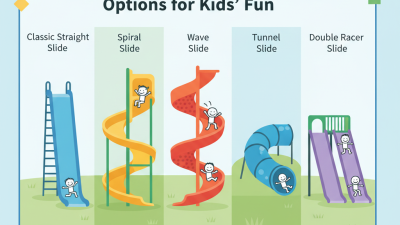
Outdoor slides differ by profile, and shape affects speed, space, and user comfort. Straight slides are easy to plan for and suit many yards. Their steady path can feel predictable, though a steep pitch may still produce a fast ride. Curved slides add turns and visual interest, but need more clearance around the exit. Spiral slides save ground space while rising around a support. They can be harder to inspect, so check every connection and landing area.

Material changes upkeep and feel. Plastic slides are usually lightweight and have smooth surfaces. Sun exposure can heat them, so touch the surface before play. Metal slides are sturdy, but they may become very hot or cold outdoors. Fiberglass options can offer a smooth ride and molded shapes, yet cracks or worn coatings need attention. No material is maintenance-free. That part is easy to overlook.

The intended setting matters as much as the slide itself. A compact backyard may suit a low, straight slide with a clear runout. Parks and larger play areas can accommodate taller structures, provided the base is stable and space around the exit stays unobstructed. Indoor play spaces often favor shorter profiles and materials suited to frequent cleaning. Match the slide to users’ ages and abilities, follow the maker’s installation guidance, and supervise play. A careful fit beats an impressive height.

What Are the Top Types of Outdoor Slides?

Representative slide-path length ranges by profile and intended setting

Straight and wave slides are common for home and public playgrounds; spiral and tube slides are generally found in larger play areas. Typical constructions include molded plastic for many residential slides and rotationally molded plastic or stainless steel for commercial installations. Lengths shown are representative examples, not fixed standards; actual dimensions vary by design and site.

Straight and Wave Slides: CPSC Guidance Calls for a 6-Foot Side Use Zone

What Are the Top Types of Outdoor Slides?

Straight and Wave Slides: CPSC Guidance Calls for a 6-Foot Side Use Zone

Straight slides offer a direct ride, while wave slides add shallow dips that change a child’s speed and posture. Both need clear space around them. CPSC guidance calls for a 6-foot use zone along each side of a slide. That space helps keep children from landing near posts, fences, benches, or other equipment. Measure from the slide’s outer edge, not from its center.

A clear zone is more than an empty patch of ground. Check for tree roots, hard edging, and nearby paths, too. Keep the area visible from where adults usually supervise. CPSC guidance also covers slide exits, where separate spacing details may apply. Check the current guidance and the equipment instructions before setting a layout. Real yards vary. A tape measure can reveal a tight spot that looked roomy.

Tips: Mark both side zones with temporary stakes or chalk before installation. Walk the full area at child height and look for hidden obstacles. Recheck after landscaping or moving nearby equipment. Small detail, big difference.

Spiral and Tube Slides: ASTM F1487 Covers Public Playground Equipment

Spiral and tube slides make descent feel faster, even when the ride is short. Their curves and enclosed sections can also hide a child from view. ASTM F1487-21, the Standard Consumer Safety Performance Specification for Playground Equipment for Public Use, addresses public playground equipment, including slide design and safety considerations. It does not cover every setting; residential equipment has a separate standard.

Details matter. A tube slide needs openings that avoid head and neck entrapment, while its entrance and exit must support safe movement. Installers should also check the slide’s fall height, use zone, and impact-absorbing surfacing. The U.S. Consumer Product Safety Commission’s Public Playground Safety Handbook reports that falls account for about 75% of playground injuries. That makes the surface below the slide as important as the slide itself. Not risk-free.

ASTM compliance is not a substitute for careful installation or routine inspection. Check for loose joints, sharp edges, cracks, and debris inside enclosed sections. A small defect can be hard to spot from the ground. The standard sets a useful safety baseline, but real playground conditions change with weather, wear, and heavy use. A slide that passed inspection last season still needs attention today.

What Are the Top Types of Outdoor Slides? - Spiral and Tube Slides: ASTM F1487 Covers Public Playground Equipment

Slide Type Typical Configuration Common Playground Use Key Design and Safety Considerations ASTM F1487 Context
Straight slide A direct, generally open route from an elevated platform to the exit. Play structures and standalone platforms; suitable age range depends on the equipment design. Consider the slide’s height, slope, access point, exit area, and the required use zone. The exit should lead to an unobstructed landing area. Public-use slide equipment falls within the standard’s scope; applicable requirements depend on the equipment and installation.
Wavy slide An open slide with a series of vertical curves along its path. Play structures where a varied descent is desired without a fully enclosed route. Check the full sliding path and exit, including how changes in slope affect the ride. Follow the manufacturer’s installation and use instructions. Evaluated as playground equipment under the applicable provisions of ASTM F1487, alongside site-specific installation considerations.
Spiral slide A curved, turning path that wraps around a central support or follows a spiral layout. Taller structures where the slide route can descend within a compact footprint. Review the entrance, curved path, visibility, and exit area. The structure and use zone should be planned for the complete slide configuration. ASTM F1487 covers public playground equipment, including relevant slide components; requirements are not a substitute for correct installation or supervision.
Tube slide A fully or partly enclosed sliding route, which may be straight, curved, or spiral. Play structures where an enclosed descent or a routed path is part of the layout. Consider visibility, entry and exit openings, the route’s geometry, and access for inspection and maintenance. Keep the exit area clear. Public playground tube-slide equipment is addressed within the scope of ASTM F1487; check the applicable edition and equipment-specific instructions.
Embankment slide A slide installed along a slope, with its support or surrounding terrain integrated into the site. Sloped play areas and landscape-based playground layouts. Assess the slope, drainage, stability, access route, and landing area. The surrounding terrain must not create additional hazards. Both the equipment and its installed setting matter. ASTM F1487 requirements should be considered together with site design and installation guidance.
Double or multi-lane slide Two or more adjacent slide lanes that allow simultaneous or side-by-side use. Busy play areas where multiple children can use the slide structure. Provide clear access and exit space for each lane, and consider how users may gather or move around the shared landing area. Apply the relevant public-playground equipment requirements to the complete configuration, including access, slide paths, and use zones.

Note: ASTM F1487 is a standard for public-use playground equipment. It does not establish one universal slide height, age range, or layout for every product. Requirements can vary by equipment design and standard edition; consult the applicable standard and the manufacturer’s instructions for a specific installation.

Multi-Lane Slides: Compare Capacity, Access, and ASTM F1487 Requirements

Multi-lane slides can move more children through a play area, but lane count alone does not determine safe capacity. A wide platform may still become a bottleneck when children queue at the entrance or exit. Capacity should follow the equipment manufacturer’s instructions and account for age range, supervision, and available space. Check the posted limits. The U.S. Consumer Product Safety Commission’s Public Playground Safety Handbook reports that falls account for about 79% of playground-equipment injuries in its cited data. That makes platform edges, clear landing zones, and suitable surfacing important parts of the layout, not afterthoughts.

Access deserves equal attention. Look for stable steps or ladders, handholds, and a platform that children can enter without crowding. ASTM F1487 sets safety requirements for public-use playground equipment, including provisions related to structural integrity, openings, barriers, and use zones. It does not assign one universal rider capacity to every multi-lane slide. Specify the applicable edition, then check the equipment documentation and site plan against it. A small detail can matter: two lanes may look independent, yet share a congested landing area. I would not assume more lanes automatically mean better access. Verify the complete route from approach to exit, and review the design with a qualified playground safety professional.

Water Slides: ASTM F2376 Covers Public-Use Systems

Water slides bring distinctive risks: speed, water flow, changing rider positions, and wet surfaces. For public-use systems, ASTM F2376 provides a framework for classifying, designing, manufacturing, constructing, and operating water slides. It is a technical practice, not a substitute for local codes or a guarantee that a ride is safe in every condition.

The standard helps project teams examine the slide as a complete system. That can include the flume, supports, water supply, rider entry, and exit or runout area. A narrow landing pool or an unclear instruction sign may deserve as much attention as the slide’s visible shape. Details matter.

Operators should use the applicable edition alongside qualified engineering review, manufacturer documentation, and site-specific inspections. Water flow and surface conditions can change during daily operation, so staff need clear procedures for checking equipment and responding to problems. Training matters. A checklist alone can miss a worn joint or a blocked drain. The standard gives teams a shared reference, but sound judgment still matters when real conditions differ from drawings.