Leave Your Message

Why Choose Outdoor Playground Sets for Schools?

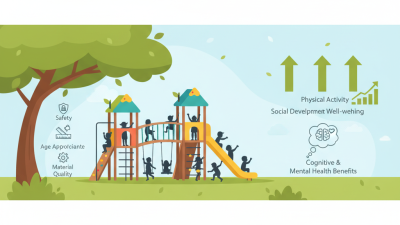
A school playground is more than a place to burn off energy. It gives students room to climb, balance, invent games, and practice sharing space. Outdoor Playground Sets can support these everyday moments when their design matches the children who use them. A low climbing structure may suit younger pupils, while older students may need more challenging movement and enough room to play without crowding.

The choice deserves careful thought. Schools should consider age ranges, available space, accessible routes, and the landing surfaces around equipment. Shade, drainage, and local weather also affect how comfortable and usable a play area feels. A set that looks impressive in a catalog may not fit a narrow yard or a busy recess schedule. That matters. Staff need clear sightlines, and students need space to move safely between activities. Regular checks and a practical maintenance plan help identify loose hardware, worn surfaces, or other changes that need attention.

There is no single set that works for every school. Even a well-planned playground can have awkward corners or activities students rarely choose. That is worth noticing. Listening to teachers, students, and maintenance staff can reveal needs a product description misses. With those details in view, schools can compare options more thoughtfully and create a play space that encourages movement, social connection, and imaginative play—without expecting equipment alone to solve every challenge.
Why Choose Outdoor Playground Sets for Schools?

What School Outdoor Playground Sets Include: Equipment Types and Play Zones

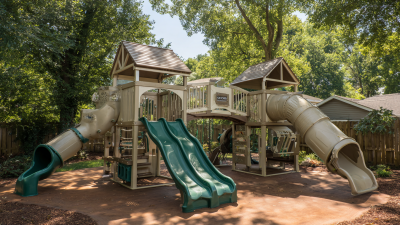
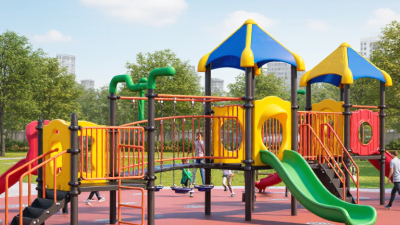
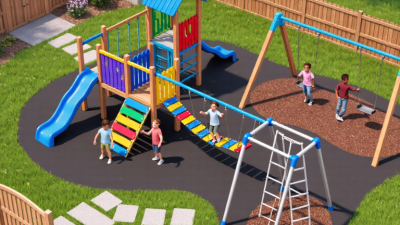
School outdoor playground sets can combine climbing frames, slides, swings, balance beams, and ground-level activity panels. Each piece supports a different kind of movement. Climbing encourages strength and coordination, while stepping pods invite children to judge distance and balance. A mix of challenge levels helps children of different ages find suitable ways to play.

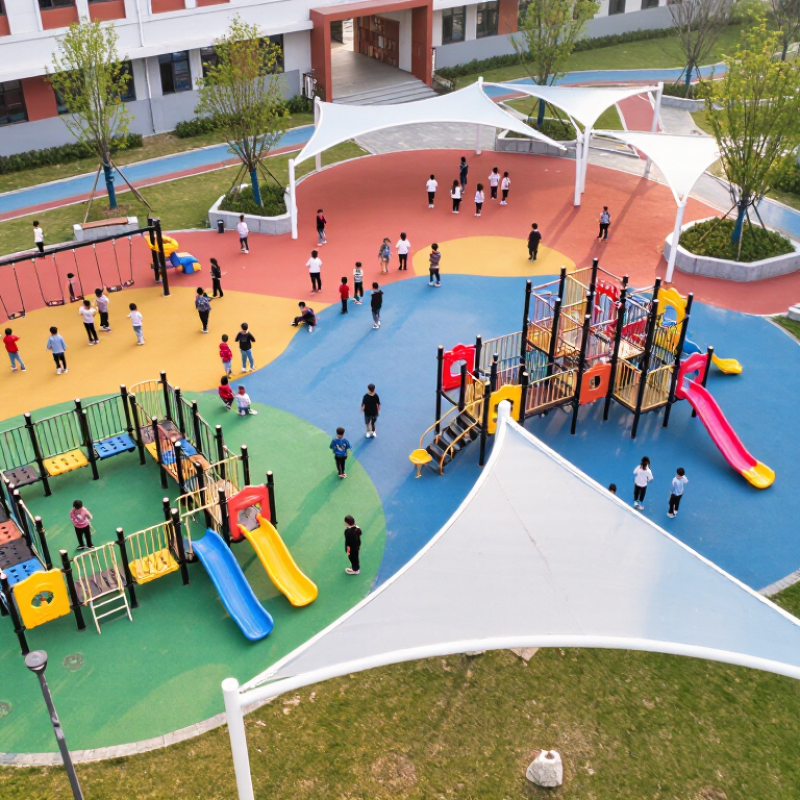
The layout matters as much as the equipment. An active zone might place swings and climbing structures over impact-absorbing surfacing, with clear space around moving equipment. A quieter area can include benches, sensory panels, or a small nature corner. These zones work best when staff can see across them and children have clear paths between activities. Access routes should also accommodate mobility devices where possible.

Play should feel varied, not crowded. A school may need to adjust the plan after watching how students actually use the space. For example, a popular slide can create a queue that crosses a running route. That detail is easy to miss on paper. Regular checks of fasteners, surfacing, and worn components help keep equipment ready for daily use.

Physical Activity Benefits: CDC’s 60-Minute Daily Goal for Children Ages 6–17

Why Choose Outdoor Playground Sets for Schools?

Physical Activity Benefits: CDC’s 60-Minute Daily Goal for Children Ages 6–17

The CDC recommends that children ages 6–17 get at least 60 minutes of moderate-to-vigorous physical activity each day. A school playground can make that target more practical during recess and physical education. Climbing, running, jumping, and balancing raise heart rates while developing coordination. Movement feels like play.

In a school setting, a well-planned outdoor area creates repeated opportunities for active choices. A child may cross stepping platforms, climb a net, then sprint toward a friend. These short bursts can add meaningful activity across the day. However, recess alone rarely supplies the full hour. The CDC also recommends muscle- and bone-strengthening activities at least three days weekly. Climbing structures and jumping areas can support these patterns when equipment suits students’ abilities.

Safety and inclusion matter as much as excitement. Schools should inspect surfaces, maintain equipment, provide shade, and plan active supervision. Accessible routes and varied challenge levels help more children participate. Still, outdoor playground sets are not a complete fitness plan. Rain, crowded spaces, limited staffing, or poor layout can reduce active time. A playground may look busy without creating enough moderate activity. Our assumptions can be wrong. Teachers can observe movement levels and adjust games, routes, or group sizes during the school day.

Why Choose Outdoor Playground Sets for Schools?

CDC Physical Activity Target for Children Ages 6–17

The CDC recommends that children and adolescents ages 6–17 engage in at least 60 minutes of moderate-to-vigorous physical activity every day. Outdoor playground sets can help schools create accessible opportunities for active play, movement, climbing, running, and games throughout the school day.

Source: U.S. Centers for Disease Control and Prevention

Age-Appropriate Equipment: CPSC’s Three Recommended Playground Age Groups

Why Choose Outdoor Playground Sets for Schools?

Outdoor playground sets can turn recess into active learning, but age fit must guide every purchase. The U.S. Consumer Product Safety Commission (CPSC) identifies three recommended age groups: infants and toddlers, 6–23 months; preschool children, 2–5 years; and school-age children, 5–12 years. Each group needs different heights, openings, steps, surfacing, and challenge levels.

For younger children, choose low platforms, small steps, protective barriers, and narrow climbing challenges. Preschool equipment can add slides, crawl tunnels, and modest climbing features. Children aged 5–12 may need higher structures, overhead activities, and more demanding balance elements. The CPSC’s 2021 report estimated 155,400 playground equipment-related injuries treated in U.S. emergency departments among children under 14. Falls remain a major concern. Age separation does not remove risk, but it can reduce mismatched use.

Tips: Place clear age labels near each zone. Check bolt caps, gaps, handrails, and surfacing before recess. Keep toddler equipment away from fast-moving swings. Staff should watch movement, not only equipment. A checklist helps, though it can still miss a loose fitting after heavy rain. Reassess the layout each term. The CPSC recommends regular inspections and protective surfacing suited to fall height. ASTM F1487 also provides technical guidance for public playground equipment, while local requirements may differ. A practical design leaves children room to explore without making supervision impossible.

Why Choose Outdoor Playground Sets for Schools? - Age-Appropriate Equipment: CPSC’s Three Recommended Playground Age Groups

CPSC Age Group Developmental Priorities Appropriate Playground Equipment Key Design Considerations Safety and Supervision Focus School Planning Value
Infants and Toddlers
6–23 months
Encourage early balance, coordination, walking confidence, sensory exploration, and basic social interaction.
  • Low platforms with easy access
  • Short ramps and gentle steps
  • Small slides designed for toddlers
  • Ground-level activity panels
  • Simple crawl-through features
  • Use low-height components with simple movement patterns.
  • Provide handholds and stable access points.
  • Avoid challenging climbing elements and openings that may trap a child’s head or neck.
  • Keep activities easy to see from nearby supervision areas.
Continuous, close adult supervision is essential. Equipment should be designed specifically for toddlers rather than shared with larger, more physically demanding structures. A dedicated toddler zone supports early childhood programs and reduces conflicts between very young children and older, faster users.
Preschool
2–5 years
Build gross-motor skills, balance, climbing confidence, coordination, imaginative play, and cooperative play.
  • Low- to moderate-height platforms
  • Preschool slides
  • Ramps, stairs, and rung ladders
  • Small climbers and crawl tunnels
  • Spring rocking equipment
  • Interactive activity panels
  • Offer multiple access routes that match developing abilities.
  • Use handrails, guardrails, and protective barriers where appropriate.
  • Provide clear pathways between activities.
  • Separate equipment for this age group from equipment intended for older children.
Adults should be able to observe the entire play area. Staff should check for falls, collisions, crowded access points, and equipment that is too difficult for younger preschool users. Preschool-focused sets provide varied play opportunities while helping schools organize children by developmental ability and reduce age-related safety conflicts.
School-Age Children
5–12 years
Develop strength, agility, spatial awareness, problem-solving, risk assessment, independence, and cooperative group play.
  • Higher and more complex climbers
  • Longer or more challenging slides
  • Overhead equipment designed for the age range
  • Track rides and dynamic movement features where appropriate
  • Balance equipment and net climbers
  • Group play structures
  • Match challenge level, platform height, and access difficulty to school-age users.
  • Provide guardrails or barriers where required by the design.
  • Arrange components to limit conflicting traffic patterns.
  • Maintain adequate use zones around equipment and keep pathways clear.
Supervision should include regular visual checks, instruction on safe use, and prompt removal of damaged or unsafe equipment. Children should not be encouraged to use equipment beyond its intended age range. Age-appropriate complexity keeps older children engaged, supports active outdoor learning, and provides opportunities for physical activity during recess and physical education.

Planning note: The U.S. Consumer Product Safety Commission identifies three primary public-playground age groups—6–23 months, 2–5 years, and 5–12 years. Schools should select equipment, protective surfacing, use zones, accessibility features, and supervision practices according to the intended age group and applicable local requirements.

Fall-Protection Planning: CPSC’s 6-Foot Use Zones and Swing Clearances

Outdoor playground sets can support active learning, but their safety depends on careful space planning. CPSC guidance commonly recommends a six-foot use zone around stationary equipment. Measure from the equipment’s outermost edge, not only from its posts. This space should remain clear of fences, benches, walls, tree trunks, and hard surfaces. Loose-fill or unitary surfacing must also cover the expected fall area at the required depth.

Swings require more generous planning. The front and rear use zones should extend at least twice the height of the swing’s pivot point. For example, a pivot point eight feet above the ground needs sixteen feet of clearance in front and behind. Side clearances should also separate the swing structure from nearby equipment and circulation paths. A child running past the frame can create a real collision risk. Keep entrances outside active swing paths.

A practical school layout begins with a scaled site drawing and a walking inspection. Mark every edge. Check gates, drainage covers, shade posts, and supervision points. CPSC recommendations are valuable, but local requirements may differ, so qualified professionals should review the final plan. No drawing is perfect on day one. Staff may notice blind spots after installation. That feedback deserves action, not dismissal. Seasonal checks matter too, because displaced surfacing can quietly reduce protection beneath busy play areas.

School Operations: ASTM Standards, Inspections, and Playground Maintenance

Why Choose Outdoor Playground Sets for Schools?

School playground operations begin with standards, not equipment selection alone. ASTM F1487 provides safety guidance for public-use playground equipment, while ASTM F1292 addresses impact attenuation for protective surfacing. These standards help schools evaluate fall heights, entrapment risks, sharp edges, and accessible routes. They are useful benchmarks, not substitutes for professional judgment.

The U.S. Consumer Product Safety Commission reports more than 200,000 playground-related injuries receive emergency treatment annually. Its Public Playground Safety Handbook identifies falls as a leading injury source. A school should complete a brief visual check each morning. Staff can look for loose bolts, exposed roots, broken hardware, standing water, and displaced surfacing. Record every finding, even minor ones. Small defects become expensive quickly.

Monthly operational inspections should test moving parts, barriers, handrails, gates, and drainage. An annual inspection by a qualified professional can identify structural wear that routine staff checks miss. Keep dated photographs and repair records. This creates accountability and supports safer decisions. It also reveals recurring problems.

Maintenance is rarely perfect.

Rain changes surfacing depth. Heavy use creates hidden compaction. Staff may overlook the quiet corner near a slide. That is a practical weakness worth confronting. Schools should review incident reports, inspection notes, and seasonal conditions together. The National Program for Playground Safety emphasizes regular supervision, maintenance, and safety education in its playground safety assessments. A clean, attractive site can still be unsafe if records are incomplete or inspections become routine paperwork.