+86-13901441113


Why Is Garden Play Equipment Important for Kids?
Garden Play equipment can turn a small outdoor space into an active learning environment. A climbing frame invites balance, grip, and careful decision-making. A swing creates rhythm, movement, and a simple sense of control. These experiences matter because children often learn through their bodies before they can explain what they know.
The World Health Organization’s 2019 guidelines recommend at least 180 minutes of physical activity each day for children aged three to four. At least 60 minutes should involve moderate-to-vigorous movement. Garden Play can support this target through short, repeated bursts of activity. Five minutes here. Ten minutes there. It still counts. The U.S. Consumer Product Safety Commission also identifies falls as a major source of playground injuries, reminding families that active play needs suitable surfaces, supervision, and regular equipment checks.
Dr. Joe L. Frost, a respected play researcher, described play as “the business of childhood.” His words remain useful, although they should not become an excuse to leave children without guidance. Good equipment does more than keep children busy. It encourages confidence, cooperation, imagination, and manageable risk. A child may hesitate before stepping onto a wooden balance beam, then try again with slower feet. That small moment can build persistence.
The evidence is encouraging, but not perfect. Outdoor play alone cannot solve every developmental challenge. Equipment quality, age suitability, space, weather, and adult attention all influence the result. A thoughtful Garden Play area should therefore offer challenge without creating avoidable danger.
Why Is Garden Play Equipment Important for Kids?
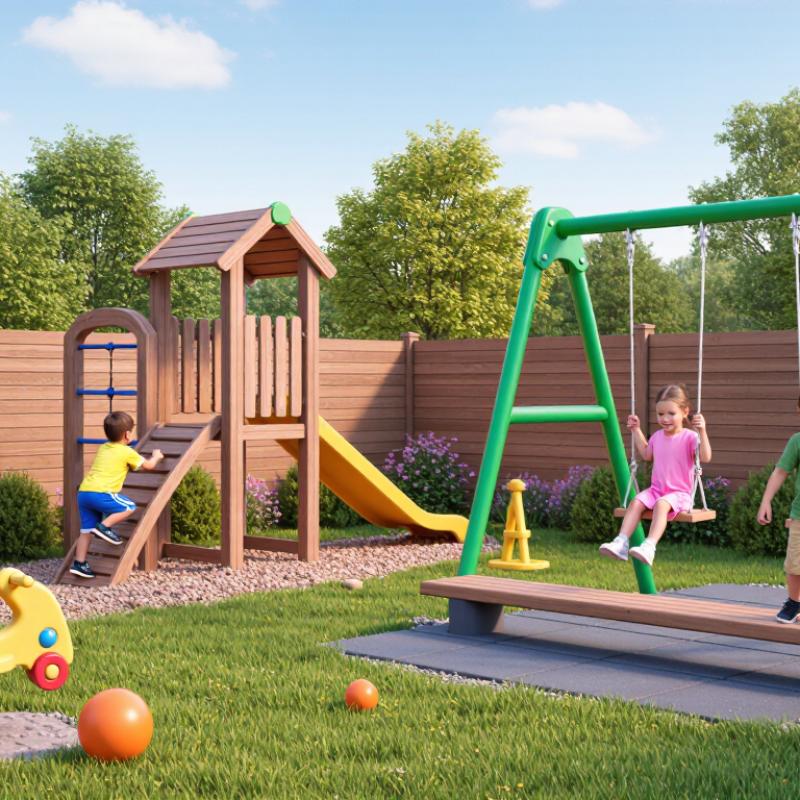
Garden play equipment means outdoor structures and materials designed for children’s movement, discovery, and social play. It includes swings, slides, climbing frames, balance beams, sand areas, water tables, and loose natural materials. These features turn grass, soil, and small spaces into active learning environments. The World Health Organization’s 2019 guidelines recommend at least 180 minutes of daily physical activity for children aged three to four. At least 60 minutes should be moderate to vigorous activity. Garden equipment can support this through climbing, balancing, pushing, pulling, and repeated movement. It is not merely entertainment.
The definition is less tidy than it sounds. A beautiful garden can still offer poor play if equipment is too high, restrictive, or unsuitable for a child’s age. The U.S. Consumer Product Safety Commission estimates that playground equipment causes about 200,000 emergency-department injuries among children each year. Safe design matters. Choose stable structures, impact-absorbing surfacing, rounded edges, and clear fall zones. Supervision remains important, especially near swings and climbing equipment. Adults should check bolts, ropes, and wet surfaces regularly. Small faults become bigger risks.
Tips: Measure the available space before buying equipment. Match challenge levels to the child’s ability, not only age. Leave room for running and imaginative play. I would also add loose parts, such as logs or fabric, because children often invent better games than adults expect. Yet loose parts need supervision and regular inspection.
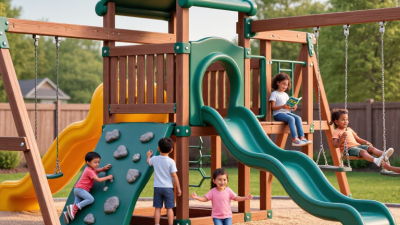
Garden play equipment includes outdoor structures and tools such as swings, slides, climbing frames, sand areas and balance equipment. These features can encourage children to move, explore, practise coordination and enjoy active play outdoors.
The chart compares international daily activity recommendations. Children under 5 should spend at least 180 minutes in physical activity across the day, while children aged 5–17 should average at least 60 minutes of moderate-to-vigorous physical activity each day. Garden play equipment can provide accessible opportunities to help children build these active habits.
Source: World Health Organization, Guidelines on physical activity, sedentary behaviour and sleep for children under 5 years of age and Guidelines on physical activity and sedentary behaviour.
Why Is Garden Play Equipment Important for Kids?
Garden play equipment gives children space to practise movement through climbing, swinging, balancing, and jumping. These actions strengthen legs, arms, shoulders, and core muscles during enjoyable, repeated play. A low platform can develop balance as a child steps up, pauses, and climbs down. Swinging also challenges body control, especially when children pump their legs and adjust their posture. Outdoor movement supports coordination, flexibility, and developing spatial awareness. Small challenges matter.
From practical observation, children often repeat one activity until it feels manageable, then invent a harder version. This self-directed practice can build confidence without turning exercise into a lesson. However, equipment should match a child’s age, size, and current ability. Adults need to inspect surfaces, moving parts, stability, and fall zones before play. Close supervision remains important, because confidence can grow faster than judgment. I have seen children rush after mastering a climb; that moment deserves calm guidance, not pressure. Not every play session looks successful.
Tips: Choose equipment with varied heights and grips, leaving clear space around each feature. Encourage climbing, crawling, and balancing, but let children set a comfortable pace. Use impact-absorbing ground, check for wet surfaces, and remove loose objects nearby. Short, active sessions are useful. Ask children what feels difficult, then adjust the challenge rather than lifting them immediately.
| Physical Development Dimension | How Garden Play Equipment Helps | Suitable Activities | Observable Developmental Indicators | Evidence-Based Reference Point |
|---|---|---|---|---|
| Cardiovascular Fitness and Endurance | Climbing, running, chasing, and repeated movement around outdoor equipment raise the heart rate and help children accumulate active play time. | Running between play stations, climbing circuits, obstacle courses, and active chase games. | Children can stay active for longer periods, recover more comfortably after exertion, and participate in repeated movement without tiring quickly. | Daily activity benchmark Children and adolescents aged 5–17 should average at least 60 minutes of moderate-to-vigorous physical activity per day. |
| Muscular Strength | Pulling, pushing, hanging, climbing, and supporting body weight engage the arms, shoulders, back, abdomen, hips, and legs. | Climbing frames, monkey bars, rope ladders, balance structures, and crawling tunnels. | Improved ability to climb, hang briefly, rise from the ground, carry light objects, and control body position. | Strength development Activities that strengthen muscles are recommended for children and adolescents on at least three days each week. |
| Bone Strength | Weight-bearing movements and jumping place healthy mechanical loads on growing bones when performed on suitable, safe surfaces. | Low-height jumping games, hopping paths, stepping platforms, and running games. | Better tolerance for weight-bearing movement, improved jumping control, and increased confidence during active play. | Bone-strengthening activity Bone-strengthening activities are recommended for children and adolescents on at least three days each week. |
| Balance and Postural Control | Raised and uneven play elements encourage children to adjust their posture, shift weight, and maintain stability. | Balance beams, stepping stones, low platforms, and curved climbing surfaces. | Children can walk across narrow or varied surfaces with fewer balance corrections and better control of their trunk and limbs. | Motor skill foundation Balance and body-control activities are common components of fundamental movement skill development. |
| Coordination and Agility | Moving through changing spaces requires the brain and muscles to coordinate timing, direction, speed, and body position. | Obstacle courses, zigzag routes, climbing combinations, and games that involve stopping and changing direction. | More accurate foot placement, smoother transitions, quicker responses, and improved ability to navigate obstacles. | Skill practice Outdoor play provides repeated opportunities to practise locomotor skills such as running, jumping, hopping, and dodging. |
| Flexibility and Range of Motion | Reaching, stretching, crawling, climbing, and stepping over equipment move joints through varied positions. | Crawl-through tunnels, low climbing structures, reaching games, and movement routes with different heights. | Children use a wider range of comfortable body positions and move more freely during climbing and floor-based play. | Movement variety Varied movement experiences help children practise different joint positions and whole-body movement patterns. |
| Fundamental Movement Skills | Garden equipment creates repeated, enjoyable practice of locomotor, object-control, and stability skills. | Running, jumping, hopping, crawling, throwing, catching, and balancing games. | Improved competence in basic movements that support later participation in sports, recreation, and everyday physical tasks. | Long-term benefit Fundamental movement competence is associated with greater confidence and participation in physical activity. |
| Spatial Awareness and Body Control | Children learn to judge distance, height, speed, and available space while moving around equipment and other players. | Moving under, over, around, and between structures; pathway and target games. | Better awareness of personal space, improved route planning, and fewer accidental collisions during active play. | Environmental learning Changing outdoor layouts provide practical opportunities to practise navigation, direction, and body-position awareness. |
| Active Play Motivation | Play equipment offers challenge, choice, and repetition, which can make physical activity more enjoyable and self-directed. | Free play, imaginative movement games, timed challenges, and age-appropriate climbing routes. | Children choose to move more often, repeat challenging activities, and remain engaged for longer periods. | Behavioural support Enjoyable, accessible, and varied activities can encourage regular participation in physical activity. |
| Safe Physical Risk Management | Age-appropriate challenges allow children to practise judging height, speed, distance, and personal limits under suitable supervision. | Low-height balance routes, graded climbing challenges, and clearly defined movement areas. | Children show better decision-making, wait for space, use equipment appropriately, and recognise when a challenge is too difficult. | Safety priority Equipment should be age-appropriate, well maintained, installed on a suitable impact-absorbing surface, and used with active supervision. |
Reference points are based on guidance from the World Health Organization on physical activity for children and adolescents, along with established principles of fundamental movement skill development and playground safety. Individual development varies by age, experience, health, and the type of equipment available.
Why Is Garden Play Equipment Important for Kids?
How Outdoor Play Equipment Encourages Cognitive and Social Skills
A climbing frame turns movement into a small problem-solving lesson. Children judge height, distance, balance, and safe landing points. They test one route, fail, and try another. I have watched a child pause halfway up, study the bars, then change direction carefully. That quiet decision shows planning in action. Swings also support timing and body awareness. Pumping legs at the right moment requires attention and repeated practice. Outdoor play makes these skills physical and memorable.
Play equipment creates social situations that cannot be fully copied indoors. Children negotiate turns, invent games, and explain rules to one another. A child may say, “You be the explorer,” while another chooses the slide as a cave. These exchanges build language, cooperation, and flexible thinking. Child-development research commonly connects active group play with stronger executive functions and social confidence. Still, not every child joins easily. Some children need a calm invitation, wider space, or extra time before participating.
Adults should observe without controlling every move. I once assumed a quiet child was uninterested, but she was studying how others used the climbing wall. After several minutes, she tried one step and then invited a younger child to follow. Safe equipment, clear boundaries, and regular checks matter. Loose bolts, slippery surfaces, or unsuitable heights can change a useful challenge into a hazard. The best play environment leaves room for managed mistakes, because children learn differently and progress rarely looks perfectly neat.
Why Is Garden Play Equipment Important for Kids?
Garden play equipment supports active movement, balance, confidence, and imaginative play. Its value depends on safe design, careful installation, and regular adult checks. A sturdy frame should stand on level ground and remain firmly anchored. Rounded edges and smooth surfaces help prevent cuts, while covered bolts reduce snagging risks. Platforms need secure guardrails, and steps should have wide, non-slip treads.
Falls remain a realistic concern. Use impact-absorbing ground material beneath climbing areas, swings, and slides. Keep hard objects away from landing zones. Check gaps between rails carefully, because small fingers can become trapped. Moving parts should avoid exposed pinch points. Equipment should also resist rust, splintering, and strong sunlight. Read the installation guidance and follow the recommended age range. These details matter more than attractive colors.
Tips: Walk around the equipment before children play. Press the frame gently and look for movement. Feel for sharp edges, loose screws, cracks, or damp, slippery areas. Leave enough space between equipment and fences. Supervise younger children closely, especially near climbing platforms. Helmets are not a substitute for safer design. No checklist catches everything. Weather changes conditions quickly, and I would recheck the surface after heavy rain. Even a well-installed structure needs maintenance, because small defects can become serious during energetic play.
Choosing garden play equipment should begin with a child’s abilities, not just their age. A two-year-old may enjoy a low slide, wide steps, and a shallow sandbox. Older children might manage climbing frames, swings, or balance equipment with greater challenge. Age labels offer useful guidance, but children develop at different speeds. Watch how confidently your child climbs, grips, and follows simple instructions.
Safety depends on more than the equipment itself. Check that the structure is stable, smoothly finished, and suitable for outdoor use. Look for secure handrails, enclosed gaps, and soft ground beneath elevated areas. Grass may look soft, but it offers limited protection after repeated use. Impact-absorbing surfacing is a safer choice. Follow the manufacturer’s installation guidance and inspect bolts, ropes, and surfaces regularly.
Active supervision still matters, especially for toddlers and beginners. Place equipment where you can see it clearly from the house or garden seating area. Remove loose scarves, cords, and toys that could cause trips or entanglement. I have found that children often attempt new movements when adults are distracted, so a quick safety check can prevent avoidable accidents. I would not choose the largest structure available; bigger is not automatically better. A smaller setup that matches current skills may encourage confident, enjoyable play.