Leave Your Message

2026 Top Outdoor Play Structure Trends for Global Buyers

In 2026, outdoor play is becoming a more thoughtful investment for schools, resorts, developers, and public authorities. Buyers are no longer choosing equipment only by color, height, or price. They are examining safety documentation, lifecycle costs, accessibility, climate resistance, and the quality of children’s movement experiences. A well-designed Outdoor Play Structure should invite climbing, balancing, sliding, social play, and quiet discovery within one visible environment.

Market evidence supports this shift, although forecasts are not perfectly consistent. Grand View Research’s Playground Equipment Market report projects mid-single-digit annual growth through the decade. Research and Markets also identifies renovation, urban development, and inclusive recreation as important demand drivers. These reports suggest steady expansion, not unlimited growth. That distinction matters. Forecasts can change when construction costs, public budgets, or shipping conditions move unexpectedly.

Professional standards remain central to responsible purchasing. ASTM F1487 in North America and EN 1176 in Europe provide widely recognized safety frameworks for playground equipment. Buyers should request current test reports, material specifications, installation guidance, and maintenance schedules. A powder-coated steel frame may look durable, yet coastal salt, intense sunlight, and standing water can shorten its service life. Small details matter. For global buyers, the strongest 2026 trends will likely combine modular design, inclusive access, nature-inspired materials, sensory features, and measurable safety performance. Still, trends should not replace site-specific judgment. A structure that works beside a cool European school may perform poorly in a humid tropical resort. Careful evaluation remains essential.
2026 Top Outdoor Play Structure Trends for Global Buyers

2026 Market Context: UN Data Shows 56% of People Live in Urban Areas

The United Nations reports that 56% of people now live in urban areas. This figure reshapes outdoor play structure demand in 2026. Many children grow up near apartments, roads, and compact public spaces. Buyers increasingly need equipment that fits smaller sites without feeling restrictive.

Urban buyers often request modular towers, climbing walls, sensory panels, and low-height balance paths. These features support active play within limited footprints. Flexible layouts also help schools and community parks adapt to different age groups. In my experience, drainage, shade, and surface maintenance affect satisfaction as much as the structure itself. A bright slide cannot compensate for standing water after rain.

Safety remains a practical purchasing standard, not a marketing phrase. Buyers should review fall zones, material durability, access points, and inspection procedures. Clear installation guidance also reduces problems during handover. Recycled materials may attract interest, but their long-term performance needs careful verification. Sustainability claims sometimes sound stronger than the evidence. A realistic design accepts compromise. More equipment is not always better. A quieter corner, tactile panels, and a shaded bench can improve how families use the entire space. In dense cities, successful play areas may resemble carefully planned outdoor rooms rather than oversized playgrounds.
Activity Design: WHO Recommends 60 Minutes of Daily Movement for Youth

2026 Top Outdoor Play Structure Trends for Global Buyers

Activity Design: WHO Recommends 60 Minutes of Daily Movement for Youth

Outdoor play structures are shifting from static climbing frames toward daily movement systems. The World Health Organization recommends at least 60 minutes of moderate-to-vigorous activity daily for children and adolescents aged 5–17. Yet, its Global Status Report on Physical Activity 2022 reports that 81% of adolescents do not reach recommended activity levels. This gap gives designers a clear responsibility.

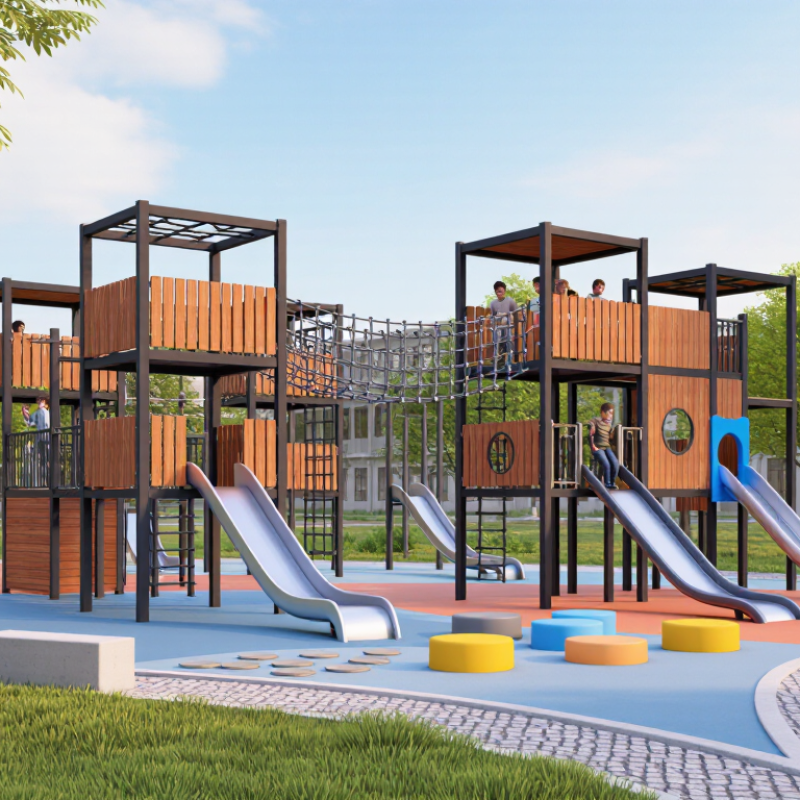
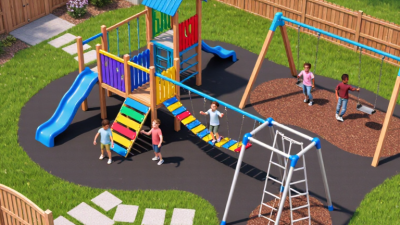
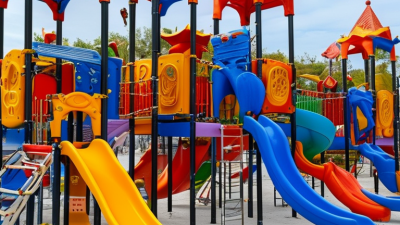
Movement should feel natural, not forced. A well-planned structure may combine climbing nets, balance beams, short slides, stepping pods, and overhead routes. Children can change direction, pause, and try again. A five-minute challenge matters. The layout should support different abilities, ages, and confidence levels without creating separate, isolated zones.

The International Play Association emphasizes varied play environments that support physical, social, and cognitive development. Buyers should therefore assess movement variety, visibility, impact protection, drainage, and maintenance access. Local climate also matters. In hot regions, shade and heat-resistant surfaces are essential. In wet climates, water management prevents slippery routes.

A perfect layout is rarely possible. Our planning can become too equipment-focused. More hardware does not always create more movement. A quieter corner, a low stepping path, or a clear running loop may encourage longer play. Global buyers should request measurable design information, including active route length, expected user capacity, inspection guidance, and accessibility performance.

Safety Baseline: CPSC Reports Over 200,000 Annual Playground Injuries

For global buyers, playground safety should shape every 2026 design decision. The U.S. Consumer Product Safety Commission estimates that more than 200,000 children receive emergency treatment for playground injuries each year. Falls remain the leading mechanism, often involving slides, climbing equipment, and insufficiently cushioned surfaces.

The CPSC’s Public Playground Safety Handbook identifies falls, entrapment, and impact injuries as major hazards. Its guidance also stresses equipment spacing, protective surfacing, guardrails, and regular inspections. Buyers should request test evidence for critical heights and verify compliance with relevant standards, such as ASTM F1487 or EN 1176. Local regulations still matter.

Details become practical quickly. A platform edge should not create a head trap. Loose-fill surfacing needs correct depth after rain, compaction, and daily use. Digital inspection records can flag worn connectors before failure. Shade structures may reduce heat exposure, but they need secure anchoring and clear sightlines.

Small errors matter.

Inclusive layouts are also gaining attention, with transfer platforms, wider paths, and sensory-friendly zones. However, accessibility should not be treated as an accessory added late. CPSC injury estimates are broad, and they do not explain every design context or maintenance failure. That limitation deserves honesty. A safer purchasing process combines supplier documentation, independent inspection, realistic site planning, and staff training. Some buyers still focus too heavily on colorful features. The quieter choices often protect children better.

Inclusive Access: UNICEF Estimates 240 Million Children Have Disabilities

2026 Top Outdoor Play Structure Trends for Global Buyers

Inclusive access is becoming a core buying requirement, not a decorative feature. UNICEF estimates that 240 million children live with disabilities worldwide, according to Seen, Counted, Included (2021). Their needs differ widely, from mobility and sensory support to communication and rest. A successful playground should offer varied entry points, firm paths, transfer platforms, quiet corners, and ground-level play. One ramp is not inclusion.

Global buyers should assess the complete play journey. Can a child reach the structure from the pavement? Can two children play together without blocking each other? The Global Report on Assistive Technology, published by WHO and UNICEF in 2022, reports that more than 2.5 billion people need assistive products. This reinforces the value of compatible layouts, clear circulation, tactile cues, and adjustable play features. Safety reviews should reference applicable local standards and test surfaces under real weather conditions. Design teams sometimes overvalue visual symmetry. Children expose that mistake quickly.

Tips: Request accessibility drawings, impact-surface test results, and maintenance schedules before purchasing. Check turning space beside slides, not only ramp width. Include caregivers and disabled children in trial sessions. Their feedback may challenge the original plan, which is useful. A beautiful structure can still exclude a child who cannot enter, pause, or participate comfortably.

Global Buying Matrix: Compare ASTM F1487 and EN 1176 Compliance Requirements

2026 buyers need a compliance matrix, not a vague “global standard” claim. ASTM F1487 is designed for public playground equipment in the United States. It addresses structural strength, entrapment, sharp edges, pinch points, protrusions, and use zones. Buyers should also check ASTM F1292 for impact-attenuating surfacing and ASTM F1951 for accessible surfacing performance. These standards work together.

EN 1176 covers playground equipment through a wider European series. EN 1176-1 sets general safety principles, while other parts address swings, slides, rocking equipment, and enclosed structures. EN 1176-7 adds guidance for installation, inspection, maintenance, and operation. Surfacing performance is commonly assessed with EN 1177. The European approach places stronger emphasis on documented risk assessment and lifecycle controls. It is not a simple translation of ASTM requirements.

The difference matters under real use. A 1.5-meter platform needs verified fall protection, clear circulation, and resilient surfacing. CPSC injury surveillance reports more than 200,000 U.S. children receive emergency treatment for playground equipment injuries in a typical year. Small design failures can become expensive claims. ASTM F1487 certification does not automatically prove EN 1176 conformity, and the reverse is also true. A single global checklist is tempting, but it creates blind spots. Our matrix is useful, not perfect. Buyers should request test reports, installation drawings, maintenance intervals, and climate-specific material evidence before approving production. In coastal regions, corrosion testing deserves extra attention. In hot climates, surface temperature data should not be ignored.