Leave Your Message

What Is the Best Playground Equipment for Parks in 2026?

Choosing the best playground equipment for parks in 2026 means looking beyond bright colors and impressive towers. A good design gives children different ways to move, imagine, and play together. It also fits the park’s space, budget, climate, and maintenance capacity. Small details matter: shaded benches, clear sightlines, smooth paths, and equipment that stays usable after rain.

Landscape architect and children’s-environment researcher Robin Moore has said, “Children need nature for the healthy development of their senses, and, therefore, for learning and creativity.” That idea helps frame the choices ahead. A well-planned Playground In The Park might pair swings and climbing features with sensory elements, natural play areas, and accessible routes. Not every park needs everything. A compact neighborhood site may benefit more from a sturdy climber and shaded seating than from a costly centerpiece. The less glamorous part matters, too: surfaces need inspection, hardware needs attention, and worn components should not be ignored. Even a beautiful layout can disappoint when the maintenance plan is vague. This guide compares equipment options, materials, safety considerations, accessibility, and long-term value. The right answer will depend on who uses the park—and what the community can realistically care for. Some choices are imperfect. That deserves a closer look.
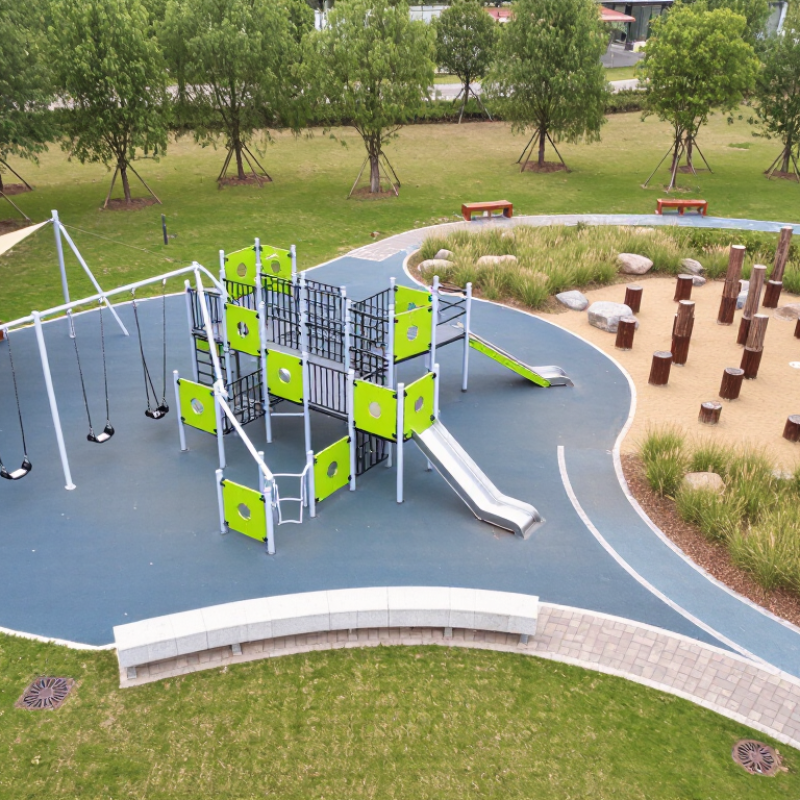
What Is the Best Playground Equipment for Parks in 2026?

How to Define the Best Playground Equipment for Parks in 2026

For a 2026 park project, “best” means equipment that fits local children, the site, and the team’s capacity to inspect and maintain it. The U.S. Consumer Product Safety Commission’s Public Playground Safety Handbook cites a 2001 estimate of 205,850 playground-equipment injuries treated in emergency departments; about three-quarters involved public equipment. The figure is historical, not a current forecast, but it underscores why fall zones and surfacing deserve careful attention. A platform is only as safe as the surface below it.

Start with how children will actually use the space. Can a child using a mobility device reach the play area? Are there quiet options alongside climbing and spinning? Check age ranges, equipment spacing, accessible routes, shade, drainage, and visibility from nearby seating. CPSC guidance and ASTM playground standards offer useful technical benchmarks, but neither replaces site-specific planning or regular inspections. Look closely at details: loose-fill surfacing can shift away from slide exits, and standing water can make a well-designed corner unusable. Small failures matter.

The strongest choice also suits the park’s maintenance reality. Compare replacement access, cleaning needs, expected wear, and inspection routines before selecting complex features. Ask caregivers and maintenance staff to walk the proposed layout; their feedback may reveal blind spots on a drawing. No checklist catches everything. A missed trade-off is possible, so document decisions and revisit them after opening.
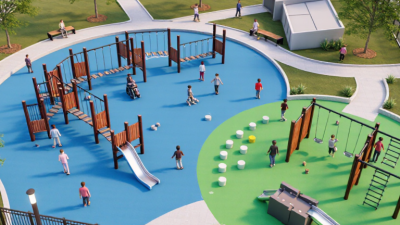
Which Equipment Types Suit Different Park Settings

What Is the Best Playground Equipment for Parks in 2026?

Which Equipment Types Suit Different Park Settings

Equipment should fit the park’s users, space, and daily conditions—not just its available footprint. In a neighborhood park, a compact climber, swings, and a shaded play area can serve mixed ages without crowding walking paths. Larger community parks can support separate toddler and school-age zones, accessible routes, and group play structures. The National Recreation and Park Association’s 2024 Engagement with Parks report found that 84% of U.S. adults consider local parks, trails, and open spaces important to quality of life. That points to broad public value, but it does not tell planners which equipment residents will actually use. Ask local families, and observe the site at busy times.

For nature-rich parks, choose lower-profile equipment that complements trees and open lawns, such as balance features, log-style elements, and low climbers. In small urban parks, prioritize compact layouts, clear sightlines, and durable swings or climbing panels. CPSC playground guidance emphasizes age-appropriate design and protective surfacing; equipment height and fall zones should shape the layout. A striking structure can still be a poor fit if it blocks a path or bakes in afternoon sun. I’d also leave room for maintenance access. That detail is easy to miss.

Tips: Map shade, entrances, drainage, and existing paths before selecting equipment. NRPA’s 2024 report highlights the importance of park access; a usable route from the sidewalk to play areas helps make that access real. Test the proposed layout with caregivers and children. Their feedback may expose awkward corners.

How Age, Accessibility, and Safety Shape Equipment Choices

What Is the Best Playground Equipment for Parks in 2026?

Age, accessibility, and safety should guide equipment choices more than novelty. The U.S. Consumer Product Safety Commission’s Public Playground Safety Handbook separates guidance for children ages 2–5 and 5–12. That distinction matters: toddlers benefit from low platforms, short slides, and easy-to-grip rails. Older children often need more challenging climbing and balancing options. A single structure rarely serves every age equally well. Separate play zones can help, but clear sightlines let caregivers supervise both.

Accessibility means more than a ramp to the entrance. The World Health Organization’s 2022 Global report on health equity for persons with disabilities estimates that 1.3 billion people experience significant disability worldwide. Parks can respond with firm, stable paths, ground-level play features, transfer points, and quiet places to pause. Small details matter. A wheelchair-accessible route that ends at the edge of the play area is not meaningful access.

Safety needs the same close attention: choose impact-attenuating surfacing suited to equipment fall heights, and keep moving features away from busy walkways. Then test it. Watch children use the space; adults may miss awkward turns, crowded landings, or a seat that is too high.

What Materials and Features Support Durability and Easy Maintenance

For a busy public park, durability starts with materials that match local weather and daily use. Galvanized or stainless-steel hardware resists corrosion, while properly coated steel posts can handle frequent contact. Coatings still need inspection; a small chip can expose metal to moisture. In coastal or snowy areas, ask suppliers how materials perform around salt and repeated freeze-thaw cycles.

High-density polyethylene panels resist splintering and do not need routine painting. UV-stabilized colors can help reduce fading, though exposure and product quality matter. For decks, textured surfaces offer grip, but deep grooves may collect dirt and leaves. That trade-off is easy to miss. Select surfaces that staff can clean with ordinary tools and water.

Maintenance-friendly design matters as much as material choice. Look for accessible fasteners, replaceable wear parts, smooth transitions, and drainage that keeps water from pooling around posts. A quick visual check can spot loose hardware, cracked panels, or worn surfacing before repairs grow. No material is maintenance-free. Park teams should keep simple inspection records and follow the equipment maker’s care guidance; schedules may need adjusting after harsh weather or heavy use.

How to Match Playground Equipment to a Park’s Needs and Budget

The best playground equipment is the equipment that fits the people and place it serves. Start by observing who uses the park, when families visit, and where caregivers can comfortably watch children. A busy neighborhood site may need separate play zones for toddlers and older children. A small park might benefit more from a compact climber, swings, and a shaded seating area than a large, elaborate structure. Check slopes, drainage, tree roots, and access routes before choosing equipment. These details can change installation costs. They are easy to overlook.

Set a full project budget, not just a purchase limit. Include delivery, site preparation, safety surfacing, installation, inspections, and future repairs. A lower upfront price may mean higher upkeep; moving parts and exposed surfaces need regular attention. Not always. Ask staff who maintain the park which repairs consume time and money. Then compare options by durability, inclusive access, age range, and expected use. If funds are tight, build in phases, but plan the complete layout first so later additions fit safely. Local requirements and site conditions vary, so have qualified professionals review the design before work begins. There is no perfect checklist. Revisit your choices with community feedback, especially from caregivers and people with disabilities.

What Is the Best Playground Equipment for Parks in 2026? — How to Match Playground Equipment to a Park’s Needs and Budget
Park Need Suitable Equipment Typical Age Range Approximate Space to Plan For Key Planning Considerations Indicative Installed Budget (USD)
Small neighborhood park with limited space Compact play structure with a slide, low climbing features, and a small ground-level activity panel 2–5 years About 1,500–2,500 sq. ft., including use zones Prioritize clear sightlines, a shaded caregiver area, accessible routes, and age-appropriate equipment heights. $25,000–$60,000
General-purpose community park Multi-activity structure, swings, climbing elements, and separate play features for younger children 2–12 years About 3,000–6,000 sq. ft., including use zones Separate areas by age where practical. Check equipment clearances and provide an accessible route to play components. $60,000–$150,000
Park serving a wide age range Distinct preschool and school-age zones, varied climbing challenges, swings, and social play features 2–12 years About 5,000–8,000 sq. ft., including use zones Offer different levels of challenge and places for caregivers to sit. Plan circulation to reduce conflicts between active play areas. $90,000–$200,000
Inclusive play for children with varied abilities Ground-level play panels, transfer-accessible features, accessible routes, and selected ramp-accessible structures Designed for a broad range of ages and abilities About 3,000–8,000 sq. ft., depending on the design Accessibility is a site-wide design goal, not a single equipment feature. Coordinate routes, surfacing, transfers, and play activities. $75,000–$220,000
Active play and physical challenge Climbing nets, overhead events, balance features, and age-appropriate dynamic equipment 5–12 years About 3,000–7,000 sq. ft., including use zones Match challenge levels to intended users and provide the required fall zones and protective surfacing. $70,000–$180,000
Low-maintenance park with constrained operating funds Durable, straightforward structures with fewer moving parts, standard replacement components, and simple layouts Choose based on the park’s primary users About 1,500–5,000 sq. ft., depending on the equipment Compare expected inspection, repair, and replacement needs—not just initial purchase price. Confirm local parts and service availability. $30,000–$120,000
Destination park with high visitor use Large multi-zone play area with varied climbing, slides, swings, inclusive features, and seating 2–12 years, with additional features where appropriate About 8,000 sq. ft. or more, depending on capacity Allow for circulation, supervision, shade, seating, and higher-use maintenance. Consider phasing if the full project exceeds available funding. $150,000–$500,000+

Budget note: These are broad planning estimates in U.S. dollars for equipment, standard installation, and typical safety surfacing. Actual costs depend on project size, site conditions, surfacing choice, accessibility features, freight, and local labor. Land acquisition, major grading, drainage work, and other substantial site improvements may add costs. Verify current pricing and applicable safety and accessibility requirements during project planning.