Leave Your Message

How to Choose the Best Outdoor Play Sets in 2026?

Choosing Outdoor Play Sets in 2026 means balancing fun, fit, safety, and the realities of your yard. A tall tower may look exciting online, but it can overwhelm a narrow lawn or sit too close to a fence. Measure the play area, including room around swings and slides, before comparing models. Then check the manufacturer’s age guidance, weight limits, anchoring instructions, and recommended surface. Details matter. A level patch of grass may seem ready, yet it might not provide the protection specified for a particular set.

Materials shape maintenance as much as appearance. Pressure-treated wood, cedar, metal, and plastic each bring different care needs, weather considerations, and price points. Look closely at joints, exposed fasteners, climbing grips, and any warranty terms. If you cannot find clear assembly or maintenance instructions, treat that as a reason to pause and ask the seller. Standards and recommendations can vary by location, so consult current guidance from relevant safety organizations and follow the product manual.

A useful comparison also considers who will play, how often, and for how many years. Toddlers need different features from school-age children, while shared play may call for multiple activity zones. It is tempting to choose the biggest set your budget allows. Bigger is not automatically better. Think about shade, drainage, seasonal upkeep, and whether replacement parts are available. No checklist removes every uncertainty, and product listings can leave practical questions unanswered. This guide helps you assess those trade-offs, compare options carefully, and choose a play set that suits your space rather than just the photographs.
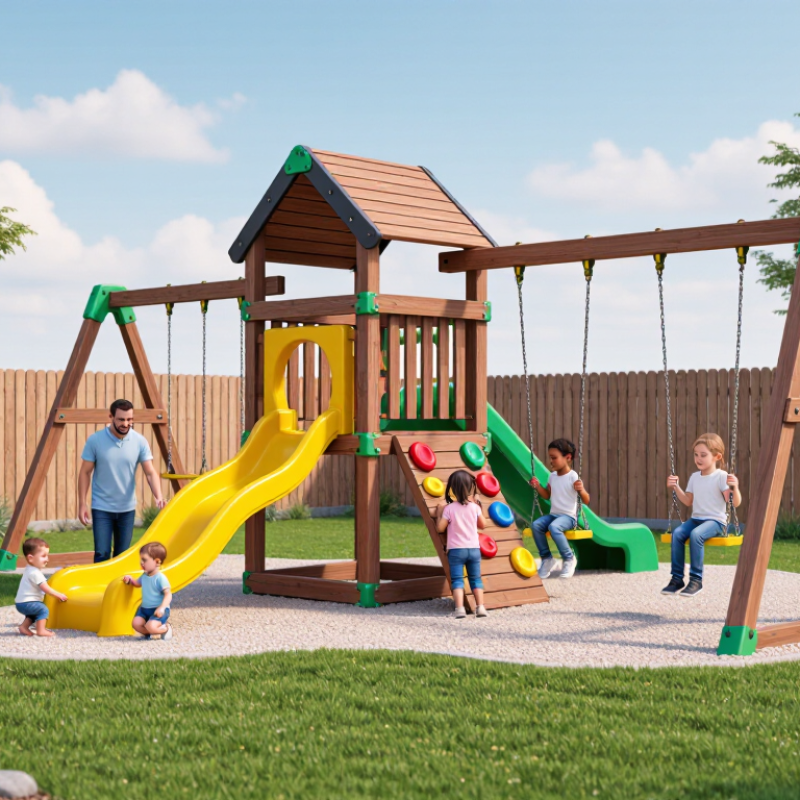
How to Choose the Best Outdoor Play Sets in 2026?

Identify Your Children’s Ages, Interests, and Play Needs

A good outdoor play set matches a child’s current abilities, not just their age on a box. Toddlers usually benefit from low platforms, wide steps, and easy-to-grip rails. Keep active supervision close. Preschoolers may enjoy short slides, simple climbing routes, and pretend-play spaces. Older children often want more challenging climbing or room to play together, but check the set’s stated age and weight limits.

Watch what your children choose at a playground. Do they climb, swing, build pretend worlds, or invite friends into a game? These habits can guide your choice better than a long feature list. A child who loves quiet pretend play may use a playhouse more than a tall climbing frame. Siblings can have different needs. That matters.

Think about confidence, coordination, and how much adult help play requires. Measure the yard, including room around the equipment, and check the installation instructions for surface and clearance requirements. Consider whether you can inspect and maintain the set regularly. Children’s interests change, and a first guess may be wrong. That is worth admitting. A flexible layout may serve them longer, while simple, age-appropriate features can make everyday play feel inviting.

Measure Your Yard and Check Site Conditions

Before comparing play sets, measure the usable yard, not just the empty patch of grass. Mark the equipment’s footprint with stakes and string, then add room for climbing, swinging, and getting on and off safely. A tape measure can create false confidence; walk the marked area and check whether gates, paths, or garden beds interrupt it.

The U.S. Consumer Product Safety Commission’s Public Playground Safety Handbook recommends a use zone extending at least 6 feet around stationary equipment. For swings, the zone in front and behind should extend at least twice the height of the pivot point. These are public-playground guidelines, so treat them as a planning reference and check the play set’s installation instructions too. Measure from the swing’s pivot, not its seat.

Then check the ground. Look for slopes, pooling water, exposed roots, low branches, and overhead wires. A level spot may still stay muddy after rain. Note where water runs and whether the surface can support the required protective material and anchors. Recheck your measurements after clearing the site; small changes can shrink the safe space more than expected.

Compare Play Set Materials, Designs, and Durability

How to Choose the Best Outdoor Play Sets in 2026?

Wood, metal, and molded plastic each age differently outdoors. Pressure-treated or naturally rot-resistant wood feels sturdy, but trapped moisture can soften joints and split boards. Check the underside of platforms, where water often lingers. Galvanized steel resists rust better than bare metal, though chipped coatings deserve prompt attention. Plastic components avoid splinters, but sunlight and temperature swings can make some parts brittle. No material is maintenance-free.

Design affects durability as much as material. A compact frame with clear ground anchors may suit a small yard; tall towers and long swings need more space and stable footing. The U.S. Consumer Product Safety Commission’s playground-equipment injury surveillance estimates roughly 200,000 emergency-room visits annually for playground-equipment injuries. That figure covers playground equipment broadly, not just home play sets, but it underscores why secure platforms, guardrails, and impact-absorbing surfacing matter. ASTM F1148 provides a residential play-equipment safety standard to check against. Look for accessible hardware, smooth edges, and parts that can be replaced individually. I would inspect bolts and swing connections each season, even on a new set. A polished finish can hide weak drainage or loose joints. Regular checks are easy to postpone.

How to Choose the Best Outdoor Play Sets in 2026

Compare common play-set materials for weather resistance, ease of maintenance, and repairability.

Ratings use a relative 1–5 guide (5 is higher), based on typical material characteristics—not standardized product testing. Actual durability depends on construction, climate, installation, and upkeep.

Evaluate Safety Standards, Features, and Age Suitability

A safe play set begins with a level, well-drained site and clear space around every swing and slide. Check the manufacturer’s instructions for required clearances, anchoring, and weight limits before comparing extras. Look for equipment standards that apply in your region, and confirm what any safety claims actually cover. A label alone cannot show whether the set suits your yard.

Small details matter. Inspect joints, fasteners, and moving parts for gaps that could catch fingers or clothing. Feel for rough edges, splinters, and exposed metal, especially around handholds and climbing routes. Choose a fall-absorbing surface suited to the equipment’s height, then keep it deep and evenly spread. No checklist catches every loose bolt.

Match the layout to children’s ages, size, and abilities, not just the age range printed on a box. Younger children usually need low platforms, enclosed sides, and easy-to-grip steps. Older children may enjoy taller climbers, but height also increases fall risk. A roomy play deck can look appealing, yet it may be awkward for a small child to reach safely. Consider how many children will play at once, and whether an adult can see the whole area from nearby. Recheck the structure regularly; weather and heavy use can loosen parts over time.

How to Choose the Best Outdoor Play Sets in 2026? — Evaluate Safety Standards, Features, and Age Suitability

Use this guide to compare residential outdoor play sets. Check the product’s stated age range, installation instructions, and applicable safety guidance before buying.

Evaluation Area What to Look For Age Suitability Practical Buying Check
Safety standard and guidance Look for documentation that identifies applicable residential playground equipment requirements, such as ASTM F1148. CPSC playground guidance can also help with hazard awareness, but public-playground guidance is not a product certification. Relevant to every age group; the equipment must also be appropriate for the child’s size, abilities, and the manufacturer’s age labeling. Ask for the instructions and safety documentation. Confirm that the stated standard applies to the specific equipment and intended residential use.
Age and developmental fit Choose equipment with a clearly stated age range and activities suited to the child’s balance, coordination, and strength. Avoid assuming that a set suitable for an older sibling is safe for a younger child. CPSC public-playground guidance uses age groups of 6–23 months, 2–5 years, and 5–12 years. These are useful reference groups, not a substitute for the residential product’s own age labeling. Check the manufacturer’s age and capacity limits for each activity, including swings, climbers, slides, and elevated platforms.
Fall height and protective surfacing Identify the highest designated play surface and the area where a child could fall. Use impact-attenuating surfacing suitable for the equipment’s fall height, and keep the required use zone clear of obstacles. Especially important for elevated activities and children who are still developing balance and coordination. Follow the installation manual and surfacing manufacturer’s specifications. Grass and soil alone should not be assumed to provide adequate fall protection.
Entrapment and openings Inspect spaces between rails, platforms, steps, and moving components for openings that could trap a child’s head, neck, or body. Check for exposed hooks, sharp edges, and protruding hardware. Pay close attention when the set may be used by toddlers or preschoolers, who may explore openings in unpredictable ways. Review the equipment against its safety instructions and inspect it after assembly. Do not modify openings or add accessories unless the manufacturer permits them.
Stability and installation The structure should be assembled on a suitable, level site and anchored as instructed. Posts, braces, and connections should remain firm during normal use. All ages; active swinging and climbing place repeated loads on the structure. Confirm the required ground preparation, anchoring method, tools, and assembly space before purchase. Recheck fasteners after installation and during use.
Materials and weather exposure Consider how the frame, coatings, ropes, and hardware are intended to withstand outdoor exposure. Surfaces should be free from splinters, corrosion, and other damage that could create hazards. All ages; younger children may touch or mouth accessible surfaces. Read care instructions and check whether replacement parts are available. Inspect for weathering, loose parts, and deterioration regularly.
Play features and supervision Match features—such as swings, slides, ladders, and climbing elements—to the children’s interests and abilities. More features are not automatically safer or more suitable. Choose simpler, lower activities for younger children; reserve more challenging climbing features for children who meet the product’s stated age and ability guidance. Consider sightlines from the home or seating area, the number of children likely to play at once, and whether an adult can supervise easily.
Ongoing inspection Plan to check for loose fasteners, worn ropes or chains, damaged components, unstable anchors, and displaced or compacted surfacing. All ages; inspection needs may increase with frequent use and exposure to weather. Follow the manufacturer’s inspection and maintenance schedule, and stop use of any component that is damaged or unstable until it is repaired.

Selection tip: Prioritize age-appropriate design, correct installation, suitable impact-attenuating surfacing, and regular maintenance. Always follow the specific product instructions and local requirements.

Review Installation, Maintenance, Warranty, and Total Cost

How to Choose the Best Outdoor Play Sets in 2026?

Installation costs extend beyond delivery. Measure the full play area, including swing paths, slide exits, and room for maintenance access. The CPSC Public Playground Safety Handbook recommends use zones around equipment; many structures need at least six feet, while swings and slides may require more. Check the exact layout before buying. A sloped yard can also add excavation, leveling, or drainage work. Estimates miss things.

Compare the installed price, not just the equipment price. Include ground preparation, anchoring, safety surfacing, tools, and labor. The CPSC handbook cites an estimate of roughly 200,000 children treated in U.S. emergency rooms each year for playground-equipment injuries. That figure covers playground equipment broadly, not backyard sets alone, but it underscores why safe surfacing belongs in the budget. ASTM F1148 also provides a safety performance standard for residential play equipment.

Maintenance affects long-term value. Plan seasonal checks for loose bolts, splintered wood, rust, shifting anchors, and worn surfacing. Keep a simple repair log. Small details matter. Read warranty exclusions for weather damage, normal wear, and problems caused by incorrect assembly. Then compare expected repairs and replacement parts over five years, alongside the upfront cost. My estimate would still include a modest contingency; real yards rarely match diagrams.