How to Choose the Best Playground Equipment for a Park?
Choosing the best playground equipment for a park starts with understanding who will use it. Children need engaging challenges, while caregivers need clear sightlines, comfortable places to sit, and easy access. The right choice should suit the site, not just look impressive in a catalog. Start with the basics: available space, age groups, ground conditions, shade, and expected maintenance. Small details matter. A slippery approach or a poorly placed bench can affect everyday use. Safety matters. So does fun.
A thoughtful Playground In The Park offers varied ways to play, including climbing, swinging, balancing, and imaginative activities. Consider how children with different abilities can reach and enjoy the play area. Check equipment spacing, accessible routes, fall surfaces, and manufacturer guidance before making decisions. Local site conditions can change what works, so involve park staff and, where possible, families in the planning. No single layout suits every park. A compact neighborhood space may need different equipment from a large destination park.
Durability and upkeep deserve the same attention as the initial price. Compare materials, replacement parts, cleaning needs, warranties, and inspection requirements. Ask who will handle routine checks and repairs after installation. A feature that looks simple may still require regular care. It is easy to underestimate that work. This guide explores the key factors behind a practical choice, from user needs and safety to budget and long-term maintenance. Plans may change. Revisit assumptions before purchase, and choose equipment that the park can support over time.
Assess the Park Site, Space, and Community Needs
Choosing playground equipment starts with a careful look at the site. Measure usable space, not just the park’s full boundary. Note slopes, tree roots, drainage channels, paths, and nearby roads. A low corner may collect water after rain. Watch how sunlight moves across the area; a metal slide can become uncomfortable in strong afternoon sun. Measure twice.
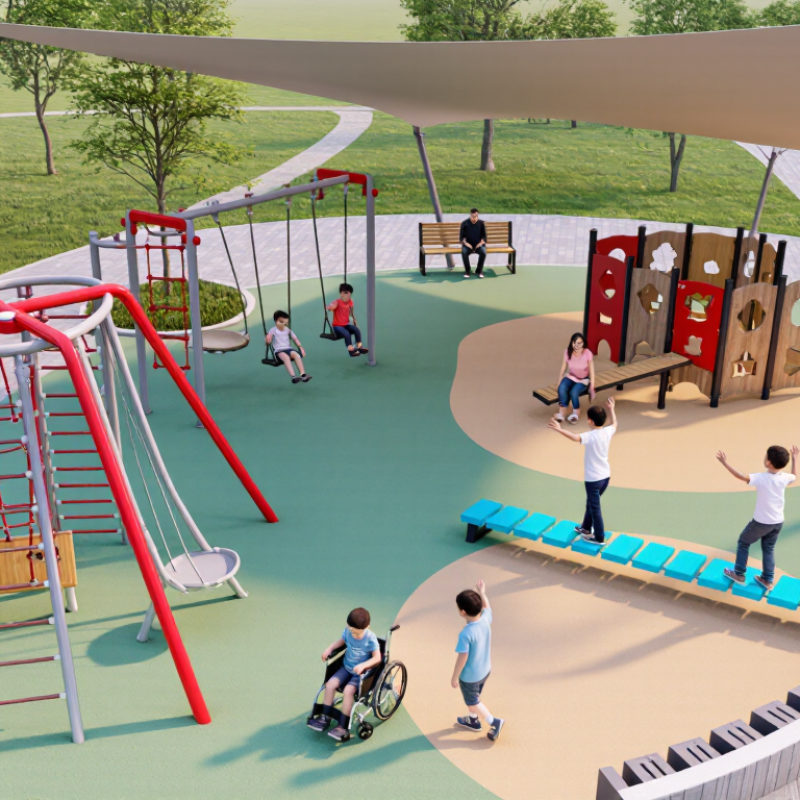
Next, learn who will use the playground and when. Observe families during busy hours, and ask caregivers, children, and local park staff what is missing. A site near homes may need quiet seating and clear sightlines. A larger park might serve toddlers, older children, and visitors with mobility needs. Plan routes between play zones, benches, and washrooms, leaving enough room for people to pass safely. Equipment should suit the available space and the community’s routines, not just look impressive on a plan. Even a thoughtful survey can miss someone’s needs, so keep asking.
Tips: Sketch the site, mark shade and wet areas, then compare equipment footprints with the remaining clear space. Check maintenance access, too. A design that is easy to inspect and repair may stay useful longer.
Identify Age Groups, Play Styles, and Accessibility Requirements
Choosing playground equipment starts with who will use it, not how dramatic it looks. Observe nearby schools, homes, and park visits at different times. Toddlers benefit from low platforms, short slides, and ground-level activities they can reach without climbing. Older children may seek speed, balance challenges, and routes linking several structures. Age labels are only clues. A cautious eight-year-old may prefer a quiet spinner, while a confident preschooler may try every step. Ask caregivers and watch children play before settling the layout. Small details matter. Shade near a bench helps adults stay close, while clear sightlines make supervision easier.
Offer different ways to play: swinging, climbing, pretend play, and quieter activities. A continuous, firm path can help wheelchair users reach play areas; nearby transfer points and accessible play features can support participation. Check that routes remain clear around equipment, especially where children gather or run. Sensory needs vary, too. A quieter corner may offer a pause, but it should still be visible to caregivers. There is no perfect mix, and a feature that looks inclusive on paper may be difficult to use in practice. Invite families with varied mobility and sensory needs to review plans, then revisit the space after opening. Children often reveal what designers missed.
Review Safety Standards and Equipment Suitability
Before selecting equipment, check the safety standards that apply to your location. Standards such as ASTM F1487 or EN 1176 offer useful reference points, but requirements vary. Ask the supplier for current test reports, installation instructions, and age recommendations. Paperwork matters. Confirm that the documents cover the exact models and configurations you plan to install, not just similar products.
Then match each structure to the children and conditions in the park. A tall climber may suit older children, while low platforms and transfer points can make play more accessible. Check fall heights and the recommended protective surfacing depth. Measure the site, too: swings need clear space in front and behind, and moving equipment should not sit beside a busy path. Look closely at edges, gaps, handholds, and exposed bolts. Small details count.
Suitability also depends on upkeep. Choose materials that tolerate local weather, and make sure staff can inspect and repair them. Ask how often components need checking and what signs require immediate closure. A checklist helps, though it cannot catch everything. After installation, walk the play area at a child’s eye level; a drainage dip or hidden pinch point can be easy to miss from a plan. Recheck equipment after heavy rain, vandalism, or repairs, and record what you find.
Compare Materials, Durability, and Maintenance Needs
Compare materials, durability, and maintenance needs before choosing playground equipment.
Powder-coated steel handles frequent use and offers strong structural support, but scratches can expose metal to rust. High-density plastic resists moisture and splintering, though prolonged sun can fade or weaken some surfaces. Treated timber has a natural appearance, but it may need sealing and close checks for cracks. No material is maintenance-free.
Durability depends on more than the material. Crowded parks, coastal air, shade, and heavy rain all affect wear. Inspect joints, fasteners, surfaces, and drainage areas on a regular schedule. Look for loose bolts, sharp edges, fading, or water collecting around posts. A small defect can become a costly repair if overlooked. One planning mistake is choosing equipment for its appearance without checking how staff will inspect it.
Tips: Ask for care instructions, expected service life, and replacement-part availability before purchasing. Match materials to local weather and daily visitor numbers. Keep a simple inspection log with dates and repair notes. Check it after storms, too. Be realistic about staffing; a maintenance plan that looks good on paper may not fit a busy park.
Set a Budget and Plan Installation and Inspection
Set a budget that covers the whole play area, not just the equipment. Request itemized estimates for delivery, assembly, ground preparation, safety surfacing, and accessible routes. Add a contingency for surprises, such as poor drainage or roots under the planned site. Those details can change costs quickly. Costs add up.
Before ordering, sketch the equipment footprint and mark entrances, paths, and nearby utilities. Confirm that installers can reach the site with their tools and materials. Ask who handles surface preparation, installation, and cleanup, and get those responsibilities in writing. A low bid may leave important work unclear. That is worth checking.
Plan inspections before the playground opens. Arrange a post-installation check, then schedule routine reviews based on the equipment guidance and local requirements. Assign a staff member to record loose bolts, damaged surfaces, standing water, and repairs. Keep a small maintenance reserve; even careful estimates miss something. Revisit the budget after the first season, when actual wear and upkeep become easier to judge.
 +86-13901441113

 CONTACT NUMBER
 CONTACT NUMBER