Top 10 Playground Manufacturers in China for Global Buyers
Choosing among the Top Playground manufacturers in China takes more than comparing prices or colorful catalog images. Global buyers need to examine construction, customization, communication, and the evidence behind product claims. Small details matter: a smooth weld, a well-finished platform edge, or clear installation instructions can shape the experience long after delivery. Dr. Joe L. Frost, a respected playground researcher, has explored how play environments support children’s development. A paraphrased principle from his work is: “Play spaces should encourage movement, imagination, and choice.” It is a useful lens for comparing suppliers, not a substitute for checking their products.
This guide introduces ten Chinese manufacturers for buyers assessing playground equipment for schools, parks, resorts, and community spaces. It considers product range, materials, design flexibility, manufacturing experience, and the clarity of available documentation. Ask for project references. Review drawings and finish samples. Confirm what installation support is included, and request details about maintenance needs. Photos can help, but they rarely show everything. A polished brochure may leave practical questions unanswered; that is worth remembering. Supplier capabilities also vary, and a strong fit for one project may not suit another. Use the list as a starting point, then verify claims directly and compare proposals against your site, budget, and intended users. The best choice is not always the most elaborate one. It should be durable, thoughtfully designed, and realistic to maintain.
What Playground Manufacturers in China Produce
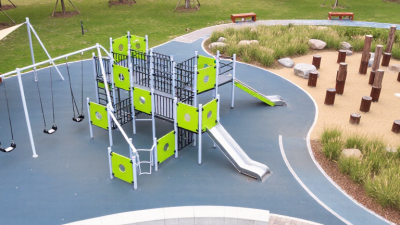
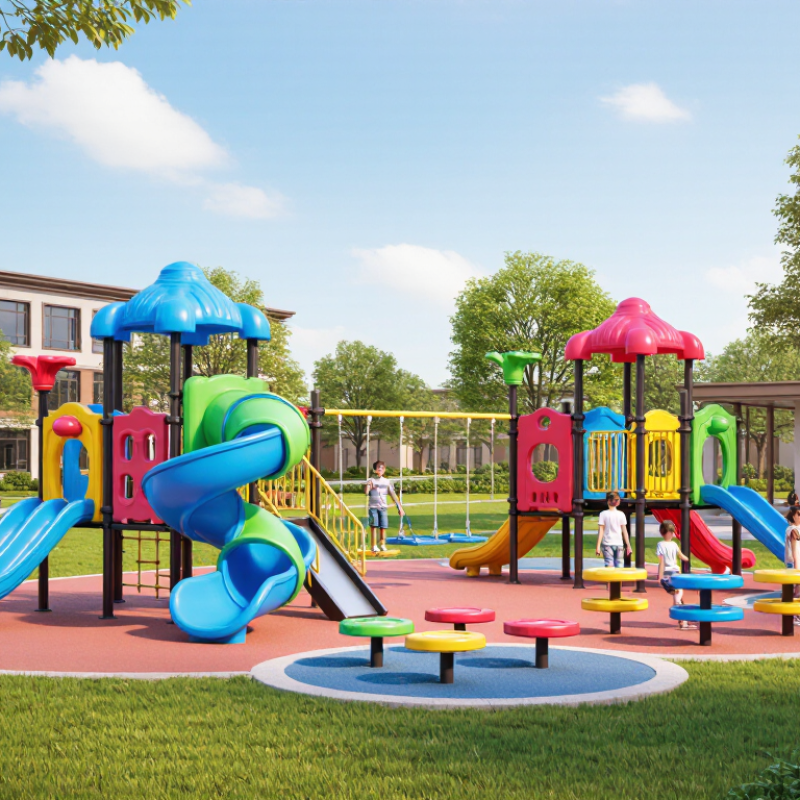
Playground manufacturers in China produce complete play systems and individual components for schools, parks, resorts, and residential developments. Common products include slides, swings, climbing frames, rope nets, balance bridges, and spring riders. A typical set combines galvanized steel posts, molded plastic panels, and stainless-steel connectors. Small details matter.
Factories may cut and weld metal frames, mold plastic parts, apply protective coatings, and assemble components for inspection. Buyers can often request changes to platform height, color, layout, or themed panels. These choices affect more than appearance: a taller slide needs suitable access steps and enough clear space around its exit. Product drawings and installation plans help teams check those details before shipment.
Manufacturers also supply smaller items, such as ground anchors, fasteners, and replacement panels, with some orders packed for overseas installation. Ask for material specifications, load-test records, inspection photos, and clear assembly instructions. A glossy rendering is not proof that every joint or finish is consistent. Not every custom feature improves play. I would compare the proposed layout with the actual site, including shade, drainage, and the space needed for children to move safely.
How the Top 10 Manufacturers Were Selected
A credible shortlist starts with evidence, not polished catalog photos. Manufacturers were compared across product engineering, production control, export readiness, and customer support. The goal was to assess consistent capability, not simply a wide product range. Details matter. Reviews considered clear drawings, stated material grades, corrosion protection, and documented inspection steps. For outdoor equipment, UV-resistant plastics, smooth welds, secure fasteners, and practical drainage also counted.
Product quality was only one part of the assessment. The selection process considered whether manufacturers could explain installation requirements, provide useful maintenance guidance, and respond clearly to technical questions. Where available, product samples, project references, and inspection records helped support catalog claims. A neat brochure is not enough. Buyers should also ask how replacement parts are handled and what support is available after delivery.
No scorecard is perfect. Company information can be uneven, and a strong factory does not guarantee a good fit for every project. The shortlist therefore weighed documented evidence more heavily than broad promises, while noting gaps that could not be independently confirmed. Criteria were applied consistently, but buyers should verify site conditions, specifications, and service expectations before placing an order.
Top 10 Playground Manufacturers in China for Global Buyers
For global buyers, “Top 10” is best treated as a shortlist to investigate, not a guaranteed ranking. Chinese playground manufacturers vary in their strengths: some focus on steel structures, while others offer themed designs, molded components, or complete site packages. Compare suppliers using the same project brief, including age range, available space, climate, and expected daily use. Details matter. Ask for material specifications, installation drawings, surface-finish information, and clear guidance on maintenance. A bright render is not proof of durable construction.
Request references for projects similar to yours, then check how the equipment has performed after installation. Confirm that proposed designs and test documentation match the safety requirements of the destination market. Also clarify packaging, shipping dimensions, spare-part availability, lead times, and who handles installation questions. A sample inspection can reveal rough edges or inconsistent coatings, though it cannot predict every issue. No checklist catches everything. I would still ask who answers when a part arrives damaged, and how quickly a replacement can be supplied. The most suitable manufacturer is not always the cheapest; it is the one that can explain its choices and support the project beyond the quotation.
Top 10 Playground Manufacturers in China for Global Buyers
Suggested evaluation priorities for comparing suppliers. These illustrative weights are a buyer’s framework, not market-survey results or ratings of individual manufacturers.
How Their Products and Services Compare
For global buyers, playground manufacturers in China differ less by catalog size than by how well products fit a specific site.
Compare steel thickness, coating options, plastic grade, and connector design. A slide exposed to strong sun needs different material considerations from equipment installed indoors. Ask for drawings that show dimensions, fall zones, and foundation requirements. Details matter.
Service can be just as important as equipment.
Some suppliers offer layout revisions, color choices, and mixed-product orders; others rely on standard configurations. Request a clear quotation that separates equipment, packing, shipping, installation guidance, and spare parts. Ask for test reports and material specifications, then check that documents match the quoted models. A polished catalog alone proves little. Response speed is useful, but precise answers matter more. That distinction is easy to miss.
Compare export packaging and after-sales support before choosing a supplier.
Ask how components are labeled, whether assembly instructions include clear diagrams, and how replacement parts are identified. Confirm expected production and dispatch windows in writing, allowing room for seasonal delays. Warranty terms can vary, so check coverage, exclusions, and claim procedures. No single supplier will be strongest on every point. Buyers should weigh product durability, documentation, customization, and communication against the needs of their project. One weak spot may remain; record it rather than assuming it will resolve itself.
What Global Buyers Should Check Before Choosing a Manufacturer
Choosing a playground manufacturer starts with evidence, not polished catalog images. Ask for references from projects similar in size, climate, and intended age range. Photos help, but speak with a past buyer when possible. Confirm the factory address, production capacity, and which components are made by subcontractors. Small details matter.
Request material specifications and test reports that match the exact equipment being quoted. Check report dates, product models, and whether an independent laboratory issued them. A certificate alone is not enough. Ask how the manufacturer checks welds, coatings, fasteners, and packaging before shipment. Even a convincing report can leave gaps if it covers a different configuration. That is easy to miss.
Review drawings for clear dimensions, access routes, and fall zones, then confirm who handles installation and site adjustments. Ask about spare parts, warranty exclusions, lead times, and response times for service requests. Get these details in writing. Compare quotations line by line; a lower price may omit freight, installation guidance, or replacement components. No checklist removes every risk, but careful questions can expose unclear responsibilities before production begins.
 +86-13901441113
 CONTACT NUMBER
 CONTACT NUMBER